
Essential Paris Travel Tips for Your First Visit
Visiting Paris for the first time is exciting, but it can also be overwhelming. Between navigating the metro, figuring out tipping etiquette, avoiding tourist traps, and deciding which museums are actually worth your time, there’s a lot to figure out. After years of helping travelers plan their perfect Paris trip, we’ve compiled every essential tip, trick, and insider secret you need to know before you go. This guide covers everything from getting around Paris cheaply and money-saving strategies to cultural etiquette and common scams to avoid — all updated for 2026. Whether you’re spending a weekend or a full week, these tips will save you time, money, and stress, and help you experience Paris like a confident, informed traveler. For more details, check out our Paris metro guide.
1. Plan Your Trip in Shoulder Season
The single biggest mistake first-time visitors make is visiting Paris in July or August. Summer is peak tourist season, which means higher prices, longer queues, hotter temperatures, and packed attractions. Instead, aim for the shoulder seasons — April through June and September through October. During these months, the weather is pleasant (15-22°C), crowds are manageable, hotel prices drop by 20-40%, and the city feels more relaxed and authentic. Spring brings cherry blossoms and outdoor markets, while autumn offers golden light and wine harvest festivals. November through March (excluding Christmas) is the low season with the smallest crowds and lowest prices, though you’ll need to dress warmly and some outdoor attractions have reduced hours. For more details, check out our guide to mistakes tourists make in Paris.
When booking flights, use Google Flights or Skyscanner to track prices and set up fare alerts. Tuesdays and Wednesdays are typically the cheapest days to fly, and booking 6-10 weeks in advance usually yields the best deals. For accommodation, consider staying in the 4th, 5th, 11th, or 3rd arrondissements for a good balance of location, atmosphere, and value. Avoid hotels immediately next to major attractions like the Eiffel Tower — they’re overpriced and the areas lack local character. Airbnb-style apartments can offer excellent value, especially for stays of 4+ nights, as you’ll save money by cooking some meals at home. For more details, check out our guide to 3 days in Paris.
2. Master the Paris Metro Like a Pro
The Paris Metro is one of the most efficient and affordable subway systems in the world, with 16 lines covering every corner of the city. A single ticket (t+) costs 2.15 euros in 2026, but the best deal is a carnet of 10 tickets for 17.35 euros — a savings of about 4 euros. If you’re planning to use public transport extensively, consider the Navigo Easy pass (a rechargeable card that works like a carnet) or the Navigo Jour semaine pass, which gives you unlimited travel for one week for approximately 30 euros. The metro runs from about 5:30 AM to 1:00 AM (2:30 AM on Fridays and Saturdays), and trains arrive every 2-5 minutes during the day.
A few critical metro tips: always validate your ticket before entering the platform — the fine for riding without a validated ticket is 50 euros, and inspectors are common. Keep your ticket until you exit, as you may need it to leave through the automated gates. On crowded platforms, stand to the side of the doors to let passengers exit before boarding. Be extra vigilant on lines 1, 4, 7, and 9, which are the most targeted by pickpockets — keep your phone and wallet in front pockets and use a crossbody bag. Download the Citymapper app (better than Google Maps for Paris) for real-time directions, delays, and service alerts. For short distances, walking is often faster and more enjoyable than the metro — Paris is a very walkable city, and some of the best experiences happen between metro stations.
3. Book Tickets in Advance to Skip the Lines
First-time visitors often underestimate how long the queues can be at Paris’s major attractions. During peak season, you can wait 2-3 hours at the Eiffel Tower, 1-2 hours at the Louvre, and up to an hour at Versailles. The solution is simple: book tickets online in advance for everything. The Eiffel Tower ticket website releases tickets 60 days ahead, and they sell out within hours — set a calendar reminder and buy the moment they become available. For the Louvre, book a timed-entry ticket online and use the Carrousel du Louvre entrance (under the glass pyramid) for the shortest queue. The Musée d’Orsay offers online timed-entry that virtually eliminates waiting.
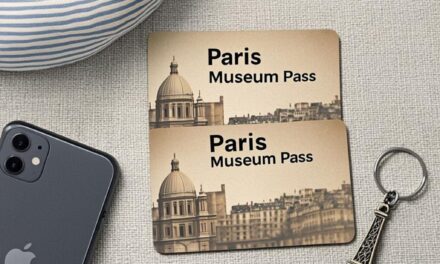
For Versailles, book the ‘passport’ ticket online — it includes the palace, gardens, and Trianon estates, and lets you skip the main ticket line. The Paris Museum Pass (2 days for approximately 55 euros, 4 days for approximately 70 euros) covers entry to over 50 museums and monuments including the Louvre, Orsay, Arc de Triomphe, and Sainte-Chapelle, and it includes a dedicated fast-track entrance at many sites. It pays for itself after 3-4 museum visits. For attractions that don’t accept the pass (like the Eiffel Tower), always check the official website for online booking. Some sites, like the Opera Garnier and the Pantheon, rarely have significant queues and don’t need advance booking. As a general rule: if it’s world-famous, book ahead. If it’s a smaller museum or monument, you can usually just show up.
4. Avoid the Most Common Tourist Traps
Paris is full of tourist traps designed to separate first-time visitors from their money, and knowing how to avoid them will significantly improve your experience. The most infamous are the restaurants with aggressive touts standing outside on pedestrian streets near major attractions — especially around Notre-Dame (rue de la Huchette), the Champs-Élysées, and Place du Tertre in Montmartre. These restaurants typically serve overpriced, mediocre food and rely on foot traffic rather than repeat customers. A reliable rule of thumb: if there’s a person standing outside handing out menus in English, keep walking. Instead, look for restaurants where the menu is written in French on a chalkboard, where locals are eating, and where there’s no pressure to order quickly.
Other traps to avoid: the ‘free’ Eiffel Tower keychains and mini Eiffel Towers sold by street vendors (they’re cheap souvenirs available everywhere for less), taxi drivers who take circuitous routes (always ask for an estimated fare or insist on the meter), and ‘closed’ attractions where friendly strangers redirect you to shops (a common scam near the Louvre). For souvenirs, skip the gift shops near major attractions and visit real bookshops, flea markets, or artisan shops instead. For currency exchange, never use exchange bureaus with huge ‘WE BUY/SELL’ signs — they offer terrible rates. Use a debit card at ATMs ( preferably bank-affiliated machines) or pay by card wherever possible, as the exchange rates are significantly better. Apps like Wise or Revolut offer excellent rates if you need to exchange money before your trip.
5. Know the Tipping Etiquette
One of the biggest culture shocks for American visitors is that tipping in Paris is not expected in the same way it is in the United States. By law, all prices in French restaurants include a 15% service charge (service compris), which is listed at the bottom of every menu. This means the waiter is already being paid a fair wage, and you are under no obligation to leave an additional tip. That said, it’s customary to leave a small amount if you’re satisfied with the service — typically 1-2 euros at a casual cafe, or 5-10% at a more upscale restaurant. The easiest way is to round up the bill: if your meal costs 37 euros, leave 40. This is understood as a ‘pourboire’ (tip) and is always appreciated.
For other services: taxi drivers don’t expect tips, but rounding up to the nearest euro is common practice. Hotel porters typically receive 1-2 euros per bag, and housekeeping staff appreciate 1-2 euros per night left on the pillow. Tour guides generally expect 3-5 euros per person for free walking tours and 5-10% for paid tours. Hairdressers get 2-5 euros, and bathroom attendants (found in some public toilets) get 0.50-1 euro. Importantly, never tip with coins at a restaurant if you’re leaving a small amount — the French consider it slightly insulting to leave small change on the table. If you’re rounding up, do it when you pay, not by leaving coins on the table. And always say ‘merci’ with a smile when you tip — the gesture matters as much as the amount.
6. Learn Basic French Phrases
You don’t need to be fluent in French to have a great trip, but making an effort to speak even a few words of French will dramatically improve every interaction you have. Parisians have a reputation for being rude to tourists, but this is largely a myth based on cultural misunderstandings. The key is simple: always start every interaction with ‘Bonjour’ (good morning/hello) and end with ‘Merci, au revoir’ (thank you, goodbye). These two phrases alone will transform the way you’re treated. In France, it’s considered extremely rude to approach someone — whether a shopkeeper, waiter, or person on the street — without greeting them first. Think of ‘Bonjour’ as the key that unlocks politeness.
Beyond greetings, these phrases will get you through almost any situation: ‘S’il vous plaît’ (please), ‘Pardon’ or ‘Excusez-moi’ (excuse me), ‘Parlez-vous anglais?’ (do you speak English?), ‘Combien ça coûte?’ (how much does it cost?), ‘Où est…?’ (where is…?), ‘L’addition, s’il vous plaît’ (the bill, please), and ‘C’est délicieux’ (it’s delicious). When you say ‘Bonjour’ in a shop and then ask ‘Parlez-vous anglais?’, the response is almost always warm and helpful. Many Parisians — especially in hospitality and tourism — speak excellent English, but they appreciate when you make the effort first. A small French phrasebook or translation app like Google Translate (download the French language pack for offline use) is invaluable. And remember: the French ‘R’ is pronounced from the back of the throat — even imperfect pronunciation is appreciated as a sign of respect.
7. Understand French Dining Culture
Dining in Paris is not just about the food — it’s a cultural ritual with its own rules and rhythms. First, understand that French meals are meant to be savored, not rushed. A typical Parisian lunch lasts 60-90 minutes, and dinner can easily stretch to 2-3 hours. Waiters will never rush you or bring the check unasked — you need to request it by saying ‘L’addition, s’il vous plaît’. This isn’t bad service; it’s French culture, where meals are social experiences to be enjoyed at a leisurely pace.
Restaurant hours differ from many countries: lunch is typically served from noon to 2:30 PM, and dinner from 7:30 PM to 10:30 PM. If you arrive at 6 PM expecting dinner, many restaurants won’t be ready. Kitchens close between lunch and dinner services, so you can’t order hot food at 4 PM — this is when Parisians snack at cafes. For the best experience, make dinner reservations, especially on weekends. You can call or use apps like TheFork (LaFourchette in French) to book, often with discounts of 20-50%. Water is not free — you’ll be offered ‘plat’ (flat) or ‘gazeuse’ (sparkling) bottled water for 3-6 euros. If you want free tap water, ask for a ‘carafe d’eau’. Bread is usually included in the price. The menu is typically divided into entrée (starter), plat (main), and dessert — ordering two courses is perfectly normal and more French than ordering three. And yes, the cheese course comes after the main and before dessert — it’s not optional, it’s essential.
8. Stay Safe: Common Scams and How to Avoid Them
Paris is a safe city for tourists, but like any major metropolis, it has its share of scams and petty crime. The most common is pickpocketing, which is especially prevalent on the metro (lines 1, 4, 7, and 9 are hotspots), around major tourist attractions, and in crowded areas like the Sacré-Coeur steps. Pickpockets work in teams — one person distracts you (dropping something, asking a question, bumping into you) while another takes your wallet or phone. The solution is simple: use a crossbody bag with a zipper, keep your phone in your front pocket, and be alert in crowded areas. Don’t place your phone on the table at outdoor cafes — it can be snatched in seconds by thieves on mopeds.
The ‘friendship bracelet’ scam at the Sacré-Coeur is still common: someone approaches you, ties a bracelet around your wrist, then demands payment. The solution is to firmly say ‘non’ and keep walking — don’t stop or engage. The ‘petition’ scam (usually near the Louvre) involves young women asking you to sign a petition, then demanding a donation while an accomplice picks your pocket. The ‘gold ring’ scam involves someone ‘finding’ a gold ring on the ground and offering it to you, then asking for money. The ‘closed museum’ scam has someone telling you the attraction you’re heading to is closed and directing you to a shop. Be alert, trust your instincts, and remember: if something feels off, it probably is. For emergencies, dial 112 (European emergency number) or 17 for police. The Paris police have a dedicated tourist unit and are generally responsive.
9. Pack Smart for Paris
Paris packing list for Paris requires a balance between comfort and style. Parisians dress well but casually — you don’t need to be in full designer mode, but you also don’t want to look like you just came from the gym. The key is a capsule wardrobe of well-fitting basics in neutral colors (black, navy, white, gray, beige) that you can mix and match. Bring comfortable walking shoes — you’ll average 15,000-20,000 steps per day — but choose stylish sneakers (like white leather Converse or Stan Smiths) rather than obvious running shoes. A light rain jacket, a scarf (the ultimate Paris accessory that instantly elevates any outfit), and layers for changing temperatures are essential.
A few specific items that will make your trip easier: a crossbody bag with a zipper (for safety), a reusable water bottle (tap water is safe and there are public fountains throughout the city), a portable charger (you’ll use your phone constantly for photos, maps, and tickets), an adapter for Type E French outlets (the standard European two-round-pin plug), and a small first-aid kit with blister plasters (those cobblestone streets are hard on feet). If visiting in spring or autumn, bring a light sweater and a medium jacket. In summer, a hat and sunscreen are important — museum queues involve a lot of standing in direct sun. In winter, bring warm layers, a waterproof coat, gloves, and a hat — Paris winters are damp and can feel colder than the thermometer suggests. And ladies, avoid high heels unless you’re going to a nice restaurant — the cobblestones and metro stairs make them impractical for sightseeing.
10. Save Money with These Insider Strategies
Paris has a reputation for being expensive, but there are countless ways to experience the city on a budget without sacrificing quality. First, take advantage of the many free attractions: all public parks and gardens (Tuileries, Luxembourg, Buttes-Chaumont), permanent collections at many museums on the first Sunday of each month, churches and cathedrals (Sainte-Chapelle charges a small fee but Notre-Dame, Sacré-Coeur, and Saint-Eustache are free), and walking tours of every neighborhood. The city’s free wifi network (Paris Wi-Fi) provides internet access at hundreds of locations across the city.
For food savings, avoid restaurants with English menus in tourist areas. Instead, eat where locals eat — explore the 11th, 3rd, and 20th arrondissements for excellent, affordable bistros where a plat du jour (dish of the day) costs 12-16 euros including a starter or dessert. Bakeries (boulangeries) sell excellent sandwiches for 5-7 euros — grab one and picnic in a park. Supermarkets like Monoprix, Carrefour City, and Franprix sell wine from 3 euros, cheese from 4 euros, and fresh baguettes for about 1 euro — a world-class picnic for two for under 15 euros. For museums, the Paris Museum Pass saves significant money if you plan to visit 3+ attractions. For transport, the Navigo Jour pass offers unlimited weekly travel for the price of about 5 single metro rides. Many museums offer discounted or free admission for visitors under 26 (EU citizens). Finally, consider the Paris Library Pass (Bibliotheque Sainte-Genevieve) — it’s free to join and gives you access to beautiful reading rooms that are worth visiting just for the architecture.
11. Best Apps for Paris Visitors
Your smartphone is your most valuable travel companion in Paris. Here are the essential apps to download before your trip: Citymapper for public transport (better than Google Maps for Paris, covers metro, bus, RER, and Velib’ bikes), Google Translate with the French language pack downloaded for offline use, TheFork (LaFourchette) for restaurant reservations with discounts, RATP for real-time metro schedules and service alerts, Velib’ for the bike-sharing system, and SNCF Connect for train bookings to day-trip destinations like Versailles, Giverny, and Fontainebleau. For museum lovers, the ‘Paris Museums’ app provides audio guides and information for dozens of museums. For shopping, ‘Galerie Lafayette’ app offers exclusive discounts. Uber works in Paris but is more expensive than taxis — try the G7 taxi app for reliable, metered taxis at standard rates. For weather, ‘Météo France’ is the most accurate for Paris conditions. And for finding nearby restaurants, bars, and attractions, ‘Yelp’ (useful for English reviews) and ‘Foursquare’ are both excellent. Download everything before you arrive, as some apps are large and French app stores may differ from your home country’s.
12. How Many Days Do You Really Need?
This is the most common question first-time visitors ask, and the answer depends on your interests and pace. Three days is the absolute minimum to see the highlights: one day for the Eiffel Tower, Seine cruise, and Arc de Triomphe; one day for the Louvre and Orsay museums; and one day for Montmartre and the Marais. With 4-5 days, you can add Versailles, Sainte-Chapelle, and more relaxed neighborhood exploration. A full week is ideal — you’ll have time for day trips, leisurely meals, and spontaneous discoveries without feeling rushed. We recommend 5-7 days for a first visit that balances must-see attractions with authentic Parisian experiences.
The biggest mistake is trying to do too much. Paris is not a city to check off a list — it’s a city to experience. If you attempt to visit 4 museums in one day, you’ll end up exhausted and frustrated, remembering nothing. Instead, plan 2-3 activities per day maximum, leaving time for wandering, cafe stops, and spontaneous discoveries. The best moments in Paris often happen when you have no plan at all — stumbling upon a street market, finding a hidden courtyard, or watching the sunset from a bridge over the Seine. Build flexibility into your itinerary, stay in a centrally located neighborhood, and remember: Paris will always be there for a return visit. It’s better to see less and enjoy it more than to rush through everything and come home stressed.
Frequently Asked Questions
Is Paris safe for tourists?
Yes, Paris is generally very safe for tourists. Use common sense: be alert for pickpockets in crowded areas, keep valuables secure, avoid poorly lit areas at night, and stick to well-traveled streets. The tourist areas are well-policed and very safe.
Do I need to speak French?
No, but learning a few basics (Bonjour, Merci, S’il vous plaît) makes a huge difference. Most people in hospitality and tourism speak English. Always start with ‘Bonjour’ and then ask ‘Parlez-vous anglais?’ — this simple courtesy transforms every interaction.
How much money should I budget per day?
Budget travelers can manage on 80-100 euros per day (hostel, street food, free attractions). Mid-range travelers should budget 150-250 euros per day (3-star hotel, restaurant meals, paid attractions). Luxury travelers can expect to spend 400+ euros per day.
Is the Paris Metro safe at night?
The metro is generally safe until closing time (around 1 AM). Main lines (1, 4, 6, 14) are busy and safe even late. Avoid empty stations and isolated platforms. RER lines to the suburbs are less safe late at night — use taxis for late returns.
What’s the best way to get from the airport to the city?
From CDG: the RER B train (12.50 euros, 35 minutes) is the best value. From Orly: the Orlyval train to Antony, then RER B (12.90 euros total). Taxis cost 55-65 euros from CDG and 35-45 euros from Orly. Book an airport transfer in advance for convenience.
Related: best things to do