Montmartre Paris Guide: The Ultimate Neighborhood Guide (2026)
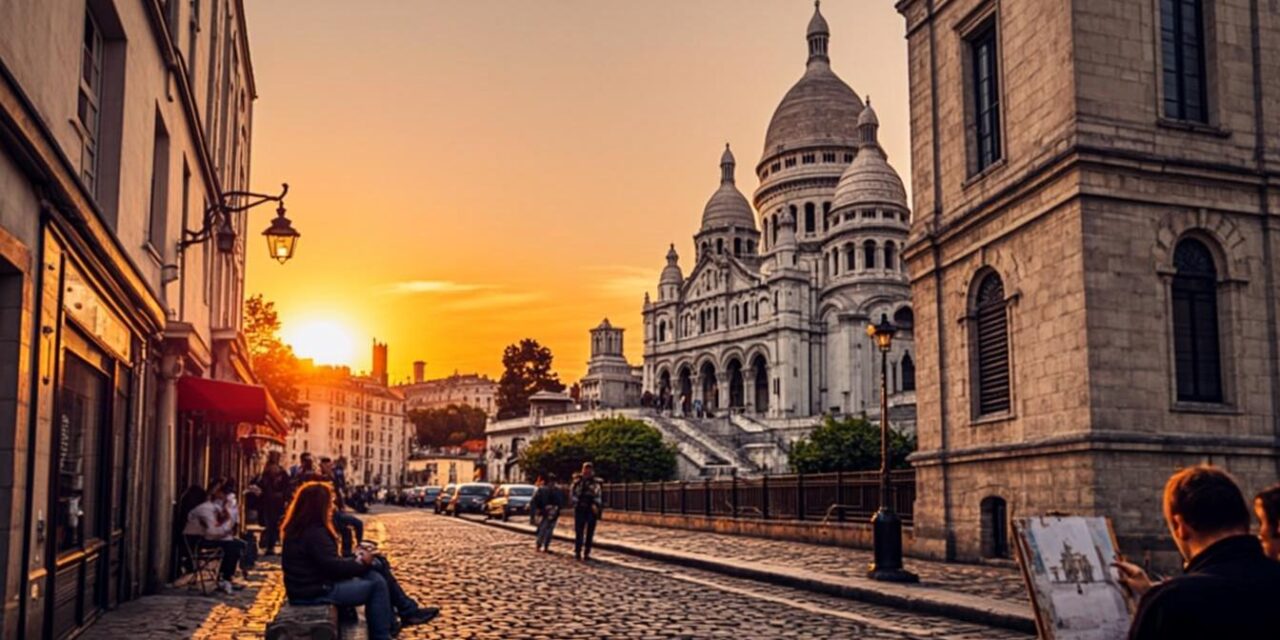
Poised on a 130-metre-high hill in Paris’s 18th arrondissement, Montmartre is unlike any other neighbourhood in the city. With its cobblestone streets, vineyards, windmills, and the dazzling white Sacré-Cœur Basilica crowning its summit, Montmartre feels like a Provençal village that somehow landed in the middle of a major European capital. This is the neighbourhood where Picasso, Modigliani, Renoir, Van Gogh, and Toulouse-Lautrec lived and worked in the late 19th and early 20th centuries, creating some of the most important art of the modern era. Today, Montmartre remains one of Paris’s most visited and most beloved neighbourhoods — a place where street artists still paint in the squares, cabarets still glow at night, and the view from the basilica steps remains one of the most breathtaking in the world. For more details, check out our Montmartre guide.
Top Things to Do in Montmartre
Basilique du Sacré-Cœur
The Sacré-Cœur Basilica, built between 1875 and 1914, sits at the highest point in Paris and offers a 360-degree panoramic view that extends for miles on a clear day — you can see the Eiffel Tower, Notre-Dame, the Panthéon, and the entire Paris skyline. The basilica’s interior features extraordinary mosaics, including the largest mosaic in France (the Christ in Majesty), and the crypt contains tombs of notable French figures. The basilica is free to enter and is open daily from 6 AM to 10:30 PM. For the best experience, climb the 300 steps to the basilica at sunrise or sunset — the views are magical at both times. The dome access (approximately €7) offers an even higher vantage point from the basilica’s cupola. For more, see our guide to Paris arrondissements guide. For more details, check out our best arrondissements.
Place du Tertre
The Place du Tertre, Montmartre’s famous artists’ square, has been a gathering place for painters since the early 20th century. Today, approximately 300 artists set up their easels around the square each day, offering portraits, caricatures, landscapes, and street scenes for prices ranging from €10 to over €200. While the square is undeniably touristy, the atmosphere is infectious, and it remains one of the most photographed spots in Paris. For a more authentic art experience, explore the side streets around Rue Lepic and Rue des Abbesses, where genuine local artists maintain studios and galleries. For more, see our guide to 3 days in Paris.
Musée de Montmartre
The Musée de Montmartre (12 Rue Cortot) is housed in the oldest building in Montmartre, where Auguste Renoir lived and painted his masterpiece Bal du moulin de la Galette in 1876. The museum tells the story of Montmartre’s artistic golden age through paintings, posters, photographs, and personal belongings of artists including Renoir, Suzanne Valadon, Maurice Utrillo, and Raoul Dufy. The museum’s beautiful Renoir Gardens — where the artist painted his famous dance scene — offer a peaceful retreat from the crowds. Entry is approximately €13 and the museum takes approximately 1.5 hours to visit.
Moulin Rouge
The Moulin Rouge, founded in 1889, is the world’s most famous cabaret and the birthplace of the modern can-can dance. While attending a show (tickets from approximately €100 per person) is a bucket-list experience, you can also admire the iconic red windmill from the outside and explore the surrounding Place Blanche, which was the centre of Paris’s bohemian Paris nightlife by neighborhood in the late 19th century.
Best Food and Drink in Montmartre
La Maison Rose (2 Rue de l’Abreuvoir) is Montmartre’s most photographed restaurant, a picture-perfect pink façade that has appeared in countless films and Instagram posts. The food is simple but charming, with excellent French classics at moderate prices. Le Consulat (41 Rue des Trois Frères) is a historic bistro frequented by Picasso, Van Gogh, and Toulouse-Lautrec, and its walls are covered with original paintings by local artists. For a budget-friendly option, grab a crêpe from one of the many stands on Rue Lepic or Rue des Abbesses, and try the local speciality: tarte tatin (upside-down caramelised apple tart) at La Goutte d’Or (56 Rue Lepic), which some claim invented the dessert.
Montmartre has its own wine — the Clos Montmartre vineyard, Paris’s last remaining working vineyard, produces approximately 1,000 bottles per year from Gamay and Pinot Noir grapes. The wine is auctioned each October at the Fête des Vendanges (grape harvest festival), and bottles are available at a few local restaurants and wine shops. For coffee, Café Lepromeneur (24 Rue Lepic) and Boot Café (19 Rue du Marché des Butte-aux-Cailles, technically in the 13th but worth the detour) are among the best specialty coffee spots in Montmartre.
Hidden Gems and Local Tips
The Passe-muraille (wall-passer) at 2 Rue Norvins is a delightful bronze sculpture by Jean Le Marais guide that appears to show a man walking through a stone wall — a reference to Marcel Aymé’s famous story Le Passe-muraille. The Cimetière de Montmartre (20 Avenue Rachel) is one of Paris’s most beautiful cemeteries and the final resting place of Alexandre Dumas, Hector Berlioz, Edgar Degas, and François Truffaut. The Le Mur des “Je t’aime” (I Love You Wall) at Square Jehan Rictus features “I love you” written in 311 languages on dark blue tiles — one of the most romantic free attractions in Paris.
Montmartre is served by metro stations Anvers (Line 2), Abbesses (Line 12 — one of the deepest stations in Paris, with a funicular-style elevator), Château Rouge (Line 4), and Blanche (Line 2). Wear comfortable shoes — the hill is steep and the streets are cobblestone. For the best experience, visit on a weekday morning when the crowds are thinner and the neighbourhood’s authentic village charm is most visible.
Related: five neighborhoods