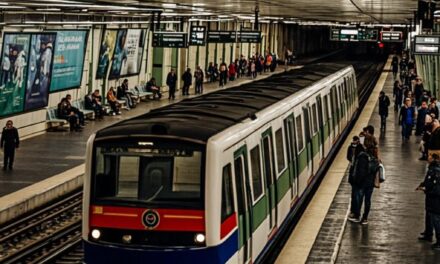
Introduction to the Paris Métro
The Paris Métro is one of the oldest, most extensive, and most iconic subway systems in the world. Opened in 1900, it now comprises 16 numbered lines, more than 300 stations, and carries approximately 4.5 million passengers every single day. For visitors and locals alike, the Métro is the fastest, most affordable, and most reliable way to get around Paris. Whether you are heading to the Eiffel Tower, Montmartre, or the Marais, the Métro will get you there.
This comprehensive guide covers everything you need to know about riding the Paris Métro in 2026—from understanding the map and choosing the right ticket to mastering transfers, avoiding rush-hour crowds, and following local etiquette. By the end of this article, you will navigate the Métro like a true Parisian. For more details, check out our guide to getting around Paris cheaply.
How to Read the Paris Métro Map
The Paris Métro map may look overwhelming at first glance, but once you understand a few key principles, it becomes remarkably intuitive. Here is what you need to know: For more details, check out our guide to Paris travel tips.
Line Numbers and Colors
Each of the 16 Métro lines is identified by a number (1 through 14, plus 3bis and 7bis) and a unique color. The color coding is consistent across all official maps, station signs, and navigation apps. When someone tells you to take “Line 4,” look for the magenta/purple line on the map.
Terminal Stations and Direction
Métro lines are identified by their terminal stations (the first and last stops on the line). For example, Line 1 runs between La Défense (Grande Arche) and Château de Vincennes. When you enter a station, directional signs will display the terminal station name, not the line number. Always look for the destination terminal in the direction you want to travel.
Station Names and Landmarks
Many stations are named after nearby landmarks, streets, or historical figures. For instance, Charles de Gaulle–Étoile is at the Arc de Triomphe, Bastille is at the Place de la Bastille, and Louvre – Rivoli is near the Louvre Museum. Learning a few key station names will help you orient yourself quickly.
Correspondences (Transfers)
Stations where multiple lines intersect are called correspondences (transfer stations). These are marked with a white circle containing the intersecting line numbers on the map. Major transfer hubs like Châtelet, République, and Saint-Lazare connect four or more lines and are incredibly useful for cross-city travel.
Line-by-Line Guide: The Most Useful Métro Lines for Tourists
Line 1 (Yellow) — The Sightseeing Line
Route: La Défense ↔ Château de Vincennes
Line 1 is arguably the single most useful line for tourists. It runs east–west across the heart of Paris and passes within walking distance of the Arc de Triomphe, Champs-Élysées, Concorde, Louvre, Hôtel de Ville, Bastille, and the Bois de Vincennes. The line is fully automated with driverless trains, making it fast and efficient. It also connects with nearly every other line, making it an ideal backbone for your Parisian adventures.
Line 2 (Blue) — The Northern Arc
Route: Porte Dauphine ↔ Nation
Line 2 runs in a broad arc across northern Paris, passing through Étoile (Arc de Triomphe), Barbès–Rochechouart, Anvers (for Montmartre and Sacré-Cœur), and Nation. It is elevated between Jaurès and Avron, offering some of the best views from any Métro line. If you are staying in Montmartre or exploring the 10th and 11th arrondissements, Line 2 will be your friend.
Line 4 (Magenta) — The North–South Cross
Route: Porte de Clignancourt ↔ Mairie de Montrouge
Line 4 is the backbone of north–south travel in central Paris. It connects Gare du Nord, Châtelet, Les Halles, Saint-Michel, Odéon, Saint-Germain-des-Prés, and Montparnasse. Fully automated since 2022, it is one of the busiest lines in the system. It is essential for traveling between the major train stations and the Latin Quarter.
Line 6 (Light Green) — The Scenic Elevated Line
Route: Nation ↔ Charles de Gaulle–Étoile
Line 6 runs in a semi-circle through southern Paris and is famous for its elevated sections between Bir-Hakeim and Passy, which offer stunning views of the Eiffel Tower and the Seine. It passes through Trocadéro, Montparnasse, and Nation, making it both practical and one of the most photogenic Métro rides in the world.
Line 7 (Pink) — The Louvre and Opera Line
Route: La Courneuve – 8 Mai 1945 ↔ Mairie d’Ivry / Villejuif – Louis Aragon
Line 7 runs from the northern suburbs through central Paris to the southern outskirts. Key stops include Palais Royal – Musée du Louvre, Opéra, Pyramides, Châtelet, and Jussieu. It branches into two southern termini, so pay attention to the destination sign. This line is essential for visiting the Louvre and the Opéra Garnier.
Line 9 (Olive Green) — The Champs-Élysées Connector
Route: Pont de Sèvres ↔ Mairie de Montreuil
Line 9 crosses Paris from southwest to northeast and passes through Trocadéro (for the Eiffel Tower viewing platform), Franklin D. Roosevelt (Champs-Élysées), Opéra, Grands Boulevards, and République. It is one of the longest Métro lines and a reliable alternative to Line 1 for reaching the western part of Paris.
Line 10 (Mustard Yellow) — The Latin Quarter Line
Route: Boulogne – Pont de Saint-Cloud ↔ Gare d’Austerlitz
Line 10 serves the Left Bank, including Saint-Germain-des-Prés, Odéon, Maubert-Mutualité (Latin Quarter), Jussieu, and Gare d’Austerlitz. It is slightly less crowded than Line 4 but covers many of the same key areas on the Rive Gauche.
Line 12 (Dark Green) — Montmartre Access
Route: Mairie d’Aubervilliers ↔ Mairie d’Issy
Line 12 runs north–south and provides direct access to Abbesses and Anvers, the two stations closest to Montmartre and the Sacré-Cœur basilica. It also serves Saint-Lazare, Concorde, and Montparnasse.
Lines 3bis and 7bis
These two short branch lines serve smaller neighborhoods in eastern Paris. Line 3bis runs between Gambetta and Porte des Lilas, and Line 7bis runs between Louis Blanc and Mairie des Lilas. Most visitors will never need these lines, but they are charming relics of the Métro’s early history.
Lines 11, 13, 14, and 15
Line 11 connects Châtelet to the northeast, extending to Rosny-Bois-Perrier. Line 13 is one of the busiest lines, serving Saint-Denis, La Défense, Saint-Augustin, Montparnasse, and the Invalides area. Line 14 is a fast, fully automated express line running from Saint-Lazare to Olympiades, serving Gare de Lyon, Châtelet, and Madeleine. Line 15 (Grand Paris Express) is the newest addition, circling Greater Paris and connecting suburbs.
Ticket Types Explained (2026)
T+ Ticket
The T+ ticket is the basic single-journey ticket for the Métro, RER train guide within Zone 1, buses, trams, and the Montmartre funicular. A single T+ ticket costs approximately €2.15 when purchased individually. You can use one T+ ticket for a single continuous journey on the Métro, including transfers between Métro lines. However, if you exit a station and re-enter, you will need a new ticket.
Carnet of 10 Tickets
A carnet is a bundle of 10 T+ tickets sold at a discounted rate of approximately €17.35 (instead of €21.50). This is one of the most popular options for short-stay visitors who do not need unlimited daily travel. Carnets can be purchased at ticket machines in every station and at ticket windows.
Navigo Easy (Reusable Card)
The Navigo Easy is a rechargeable smart card that you can load with T+ tickets, carnets, and other passes. The card itself costs €2 and can be purchased at ticket windows and machines. It is convenient because you do not need to carry paper tickets—simply tap the card on the turnstile reader. You can also load airport-specific tickets onto a Navigo Easy card.
Navigo Semaine (Weekly Pass)
The Navigo Semaine is a weekly travel pass that provides unlimited travel across all zones (1–5) on the Métro, RER, buses, trams, and Transilien trains. It costs approximately €30 (full fare) or €15 (reduced fare). The weekly pass is valid from Monday to Sunday—not from the day of purchase. If you arrive on a Wednesday, your pass will still expire on Sunday. You will need a passport-sized photo to purchase a Navigo card for the first time.
Navigo Mensuel (Monthly Pass)
The Navigo Mensuel is the monthly equivalent of the weekly pass, costing approximately €84.10 (full fare). It is valid from the 1st to the last day of the calendar month. Long-stay visitors and expats almost always opt for this pass, as it pays for itself after roughly 15–20 trips per week.
Understanding Zones
The Paris transport network is divided into 5 concentric zones. Zone 1 covers central Paris (all Métro stations). Zones 2–5 extend outward to the suburbs, airports (CDG and Orly are in Zone 5), and destinations like Versailles. A standard T+ ticket covers only Zone 1. If you travel beyond Zone 1 on the RER, you will need a billet origine-destination (point-to-point ticket) priced according to the zones crossed. The Navigo weekly and monthly passes cover all five zones.
Operating Hours
The Paris Métro operates from approximately 5:30 AM to 1:15 AM from Sunday to Thursday, and until approximately 2:15 AM on Fridays, Saturdays, and the nights before public holidays. On special occasions such as New Year’s Eve or the Fête de la Musique, the Métro may run all night. The last trains vary by station and line, so always check the schedule if you are traveling late. You can find real-time schedules on the RATP website or on navigation apps.
How to Transfer Between Lines
Transferring between Métro lines is free as long as you stay within the paid area of the station. Follow the white-on-blue “Correspondance” signs. Major transfer stations can involve significant walking—Châtelet–Les Halles is notoriously complex, with connections to Lines 1, 4, 7, 11, 14, and RER A, B, and D. Allow 5–10 minutes for transfers at large stations, especially if you have luggage or mobility concerns.
Best Apps for Navigating the Métro
Citymapper
Citymapper is widely considered the best transit app for Paris. It provides real-time departures, step-by-step navigation including walking directions within stations, service alerts, and even suggests ride-sharing options as alternatives. It covers the Métro, RER, buses, trams, and Velib bike-sharing.
RATP Official App
The RATP app is the official application of the Paris transit authority. It offers real-time schedules, route planning, service disruption alerts, and maps. It is especially useful for checking whether your line is running normally before you head to the station.
Google Maps
Google Maps integrates Paris transit data and is reliable for basic route planning. However, it is less detailed than Citymapper for complex transfers and does not always show real-time disruption information as quickly.
Paris Visite App
The Paris Visite companion app helps tourists plan multi-day itineraries and includes information about tourist passes and discounts. It is less essential than Citymapper but useful as a supplementary tool.
Rush Hour: Which Lines to Avoid and When
Paris rush hours are approximately 7:30–9:30 AM and 5:00–7:30 PM on weekdays. During these times, certain lines become extremely crowded:
- Line 13 is notoriously the most overcrowded line in Paris—avoid it during rush hour if possible.
- Line 4 runs at near-capacity during peak times due to its north–south central route.
- Line 1 is crowded throughout the day because of its tourist-heavy route, but especially during rush hour.
- RER A and RER B are not Métro lines but share stations and become extremely packed during commuter hours.
If you must travel during rush hour, consider using bus lines or walking as alternatives for shorter distances. Buses are often less crowded and offer the bonus of seeing the city above ground.
Accessibility Information
The Paris Métro is famously not fully accessible. Most stations were built in the early 20th century and have multiple flights of stairs with no elevators. As of 2026, the following resources are available:
- Line 14 is fully accessible with elevators at every station—this is the only entirely accessible Métro line.
- Line 1 has been progressively upgraded and many central stations now have elevators or escalators.
- The RATP website provides a detailed accessibility map showing which stations have elevators, escalators, and tactile guidance paths.
- Bus lines are much more accessible than the Métro, with low-floor buses and wheelchair ramps on most routes.
- The Montmartre funicular is accessible and can be used with a standard T+ ticket.
- Tactile paving and audio announcements are available on Line 14 and are being rolled out across additional lines.
Travelers with mobility impairments should seriously consider using buses or taxis for certain journeys. The RATP also operates a specialized accessible transport service that can be booked in advance. For more details, check out our guide to alternative transport in Paris.
Safety Tips
The Paris Métro is generally safe, but like any major metro system, it requires basic awareness:
- Watch your belongings at all times, especially in crowded stations and on packed trains. Pickpocketing is the most common crime on the Métro, particularly around tourist hotspots like Châtelet, Louvre, and Anvers.
- Keep your phone and wallet in a front pocket or zipped bag. Avoid placing valuables in back pockets or open bags.
- Be cautious late at night. While the Métro is generally safe even after dark, some peripheral stations in quieter neighborhoods may feel isolated. Stick to well-lit areas and carriages with other passengers.
- Emergency call points are located at the end of every platform and in every train car. The intercom connects you directly to station staff.
- Avoid engaging with street performers or petitioners on the trains—these are common distractions used by pickpockets.
- If you feel unsafe, move to the first car near the driver (or the front of the train on automated lines, where staff may be present).
Métro Etiquette: How to Ride Like a Local
Parisians have unwritten rules for the Métro that visitors should follow:
- Stand to the right on escalators. The left side is for people walking up or down. This is strictly observed.
- Let passengers exit before you board. Stand to the side of the doors and wait for everyone to get off before stepping on.
- Do not block the doors. If the train is full, step back and wait for the next one rather than trying to squeeze in and blocking the doors from closing.
- Keep your voice down. Parisians generally speak quietly on public transport. Loud phone conversations and music without headphones are considered rude.
- Offer your seat to elderly passengers, pregnant women, and people with disabilities. Priority seats are marked with signs.
- Do not eat full meals on the Métro. A quick snack is acceptable, but eating a full meal is frowned upon.
- Carry backpacks in front of you during rush hour to save space and protect your belongings.
Practical Tips for First-Time Riders
- Buy your tickets in advance at a tabac (tobacco shop) or from the automated machines in stations. Machines accept credit cards and coins.
- Validate your ticket by inserting it into the turnstile (or tapping your Navigo card). Keep your ticket until you exit, as inspectors conduct random checks and fines are steep (€50+).
- Download offline maps in case you lose internet connectivity underground. Citymapper allows you to download city data for offline use.
- Wear comfortable shoes. You will walk a lot on the Métro—transfers, stairs, and long corridors mean you should leave the heels at the hotel.
- Carry small change for public toilets at some stations, which may cost €0.50–€1 to use.
- Take note of which exit you need at your destination station. Large stations have multiple exits (sorties), and choosing the wrong one can add 5–10 minutes to your walk. Station maps showing exit locations are posted on platforms.
Conclusion
The Paris Métro is more than just a transportation system—it is an essential part of the Parisian experience. With 16 lines, hundreds of stations, and over a century of history, it connects every corner of the city and makes exploring Paris accessible to everyone. By understanding the ticketing system, learning to read the map, knowing which lines serve your destinations, and following local etiquette, you will navigate the Métro with confidence and ease. Whether it is your first visit or your fiftieth, the Métro remains the very best way to discover Paris.