Why Spring is the best time to visit Paris Paris
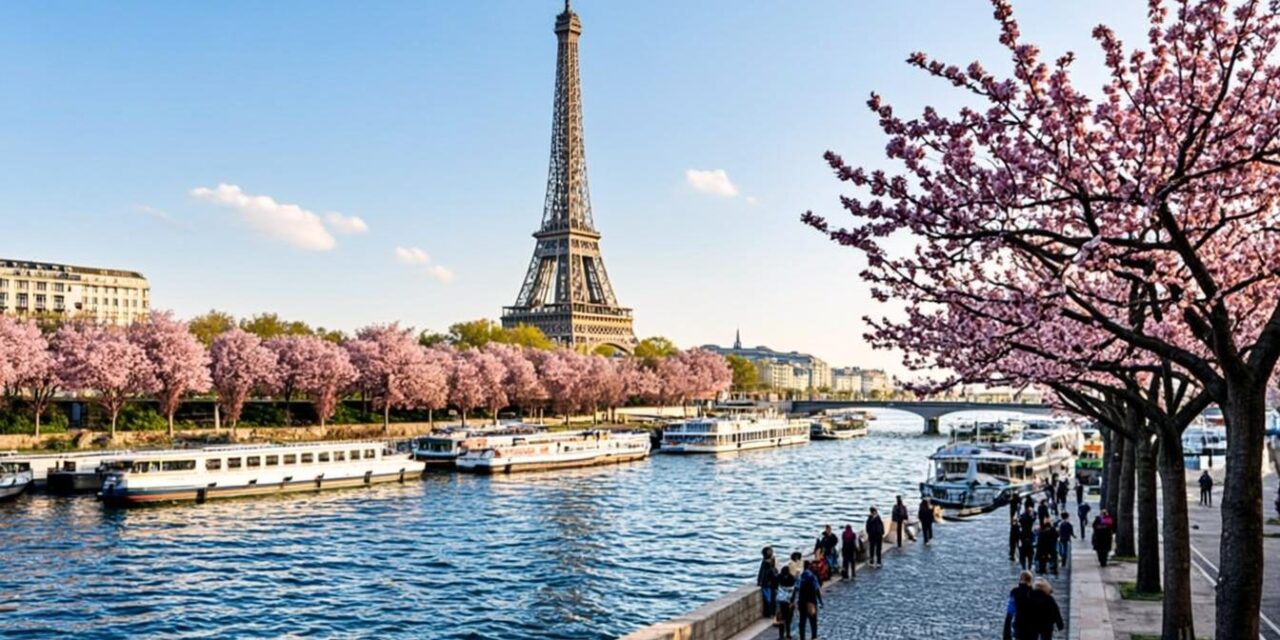
Spring in Paris is nothing short of magical. From late March through early June, the city undergoes a breathtaking transformation — cherry blossoms burst into bloom along the Seine, sidewalk cafes spill onto the streets, parks fill with sunbathing locals, and the entire city seems to take on a golden, romantic glow. The weather is comfortably mild, with temperatures ranging from 12 to 20 degrees Celsius, making it perfect for long walks along the river, leisurely museum visits, and afternoons spent people-watching from a terrace. Unlike summer, when the city swells with overwhelming tourist crowds and hotel prices skyrocket, spring offers a more relaxed, authentic Parisian experience at significantly lower prices.
But spring in Paris isn’t just about pleasant weather — it’s also the season of some of the city’s most exciting events, exhibitions, and festivals. From the Paris Marathon to Art Paris, from outdoor markets to garden parties, there’s an energy in the city that you simply won’t find at any other time of year. Whether you’re a first-time visitor or a seasoned Paris lover, spring 2026 is the perfect time to fall in love with the City of Light all over again. Here are the 15 best best things to do in Paris in Paris during spring, curated with insider tips to help you make the most of this extraordinary season.
1. Chase Cherry Blossoms at Parc de Sceaux
While tourists crowd around the cherry trees near the Eiffel Tower, Parisians head to Parc de Sceaux, a magnificent 186-hectare park about 30 minutes south of the city center by RER B. Every things to do in Paris in April, over 1,200 cherry trees erupt in clouds of pink and white blossoms, creating a spectacle that rivals anything you’ll see in Kyoto. The trees were originally planted in the 1920s along the park’s grand canal, inspired by the Japanese cherry blossom tradition, and today the park hosts annual hanami (cherry blossom viewing) celebrations that draw locals and visitors alike.
The best time to visit depends on the weather each year — blossoms typically peak during the first two weeks of April, but warmer years can bring them earlier. Check the park’s social media for bloom updates before your visit. The RER B train drops you right at the park entrance (Sceaux station), and admission is completely free. Pack a picnic, bring a blanket, and settle under the blossoms for an unforgettable afternoon. The park also features the magnificent Chateau de Sceaux, which you can visit for a small fee. If you can only pick one cherry blossom spot in the Paris area, make it this one — it’s far more impressive and far less crowded than the spots in central Paris.
RER: B line to Sceaux | Entry: Free | Best time: Early April for peak bloom
2. Walk the Promenade Plantée at Peak Bloom
The Promenade Plantée (also known as La Coulée Verte René-Dumont) is a 4.7-kilometer elevated park built on a disused railway viaduct, and spring is without question the best time to experience it. From April through May, the planted beds along the elevated pathway burst with roses, lavender, wisteria, and wildflowers, creating a fragrant, colorful corridor above the streets of the 12th arrondissement. The elevated perspective gives you a unique vantage point over the Parisian rooftops, and the spring blooms transform the walk into a genuinely magical experience that feels far removed from the city below.
Start at the Bastille end and walk east toward the Bois de Vincennes. The first 1.5 kilometers — running along the Viaduc des Arts — are the most scenic, with the elevated gardens at their most lush. Below the viaduct, the former railway arches house artisan workshops, galleries, and cafes that are worth exploring. The walk takes about 45 minutes at a leisurely pace, but budget at least two hours if you want to stop for coffee, browse the shops, and really take in the views. Wear comfortable shoes, bring a camera, and try to visit on a weekday morning when you’ll practically have the promenade to yourself. It’s one of the most romantic and photogenic spots in Paris during springtime, yet most tourists have never heard of it.
Metro: Bastille | Entry: Free | Best time: April–May for peak blooms
3. Experience the Paris Marathon
The annual Schneider Electric Paris Marathon, typically held in early April, is one of the biggest sporting events on the Parisian calendar and an incredibly festive occasion even if you’re not running. Over 50,000 runners from around the world take on the 42.2-kilometer course, which winds through some of Paris’s most iconic neighborhoods — from the Champs-Élysées to the Bois de Vincennes, passing by the Louvre, Notre-Dame, and the Eiffel Tower along the way. The atmosphere is electric, with live music, cheering crowds, and a genuine party spirit that takes over the city for the entire weekend.
If you’re not a runner, the best strategy is to stake out a spot along the course in a scenic area — the banks of the Seine near Notre-Dame or the finish line on the Avenue Foch are particularly exciting. Many cafes along the route set up outdoor seating so you can enjoy a coffee and a croissant while watching the runners go by. If you want to participate, registration opens several months in advance and usually costs around 90-100 euros. The race fills up fast, so sign up early. Even if running isn’t your thing, the accompanying running expo at the Porte de Versailles is free to enter and features hundreds of brands, free samples, and fitness demonstrations. It’s a fantastic event that brings the whole city together in celebration.
When: Early April 2026 | Cost: Free to spectate | Best spot: Seine banks near Notre-Dame
4. Visit the Tuileries Garden in Full Bloom
The Jardin des Tuileries, stretching between the Louvre and Place de la Concorde, is Paris’s oldest and most famous public park, and it absolutely sparkles during spring. Designed by Andre Le Notre (the same landscape architect who created the gardens at Versailles) in 1664, the formal French garden features symmetrical gravel paths, manicured lawns, classical sculptures, and two large ornamental ponds. In spring, the trees leaf out in fresh greens, the flower beds erupt with tulips, daffodils, and hyacinths, and the entire garden is bathed in that soft, golden Parisian spring light that photographers dream about.
Arrive early in the morning (before 9 AM) for the most peaceful experience and the best light for photography. The garden is particularly beautiful when the tulip beds along the central promenade are at peak bloom — usually mid-to-late April. Grab a coffee from one of the garden’s two cafes, find a green metal chair by the pond, and watch the morning unfold. The Musée de l’Orangerie, home to Monet’s magnificent Water Lilies murals, is located at the southwest corner of the garden and is an essential spring visit — the natural light through the skylights is especially beautiful during spring mornings. The garden is free to enter and open from 7 AM to 9 PM, making it an easy and rewarding stop on any spring itinerary.
Metro: Tuileries or Concorde | Entry: Free | Best time: Early morning, mid-April for tulips
5. Explore Paris’s Outdoor Markets
Spring is when Paris’s legendary outdoor markets truly come to life. After the gray winter months, the markets explode with seasonal produce — fat white asparagus, sweet Gariguette strawberries, fresh peas, radishes with butter, and the first cherries of the season. The colors and aromas are intoxicating, and shopping at an outdoor market is one of the most authentically Parisian experiences you can have. For food lovers, spring market shopping in Paris is essentially a religious experience.
The Marché d’Aligre in the 12th arrondissement is our top recommendation — it combines a vibrant fresh produce market with a flea market, and the atmosphere is wonderfully chaotic and genuine. The Marché des Enfants Rouges in the Marais (the oldest covered market in Paris, dating to 1615) is another must-visit, offering a multicultural food court under historic iron-and-glass pavilions. For something more upscale, the Marché Bastille on Sunday mornings is fantastic, with organic produce, artisanal cheeses, and excellent prepared foods. The Marché aux Puces de Porte de Vanves, held every Saturday and Sunday, is the best flea market for antique hunters. Whichever market you choose, go early (before 9 AM) for the best selection and the most authentic experience. Bring cash and a reusable bag, and don’t be afraid to ask vendors for samples — it’s part of the culture.
Cost: Free to browse | Best markets: Aligre, Enfants Rouges, Bastille | When: Tuesday–Sunday mornings
6. Cruise the Seine at Sunset
A Seine river cruise is enjoyable year-round, but during spring it becomes an absolutely transcendent experience. As the sun drops lower in the sky, the golden light illuminates the bridges, the riverside architecture, and the trees along the banks — all of which are lush and green for the first time in months. The combination of warm evening air, sparkling water, and the city’s most beautiful monuments bathed in golden light creates a moment that will stay with you forever. Several cruise companies operate from docks near the Eiffel Tower and Notre-Dame, with prices ranging from 15 to 25 euros for a one-hour cruise.
For the most romantic experience, book the last departure of the day (usually around 8:30 PM in April and 9:30 PM in May) so you can watch the sunset from the water and see the city lights begin to twinkle. Bateaux Parisiens and Bateaux Mouches are the two largest operators, but for a more intimate experience, try Vedettes du Pont Neuf, which uses smaller boats that depart from near Notre-Dame. If you’re feeling adventurous, you can also rent a small electric boat from Marin d’Eau Douce near the Bassin de la Villette and pilot yourself along the Canal Saint-Martin — a magical experience on a warm spring evening. Whichever option you choose, bring a light jacket (it can get breezy on the water) and a camera — the photo opportunities are extraordinary.
Price: 15–25 euros | Best time: 30 minutes before sunset | Top operator: Vedettes du Pont Neuf
7. Discover the Musée de l’Orangerie in Spring Light
The Musée de l’Orangerie, nestled in the corner of the Tuileries Garden, is home to Claude Monet’s legendary Water Lilies murals — eight massive canvas panels housed in two oval rooms specifically designed to display them. While the museum is always beautiful, spring takes the experience to another level entirely. The natural light that floods through the skylights is softer and warmer during spring months, perfectly complementing Monet’s blues, greens, and purples. After viewing the murals, step outside into the Tuileries Garden, which in spring provides a living, breathing continuation of Monet’s painted gardens.
The museum also houses an excellent collection of Impressionist and Post-Impressionist works by Renoir, Cézanne, Picasso, Matisse, and Modigliani. Spring is an ideal time to visit because the museum is less crowded than in summer — you can often have the Water Lilies rooms almost entirely to yourself if you visit on a weekday morning. Tickets cost approximately 14 euros, and the museum is open every day except Tuesday. Combine your visit with the nearby Musée d’Orsay (just across the river) for a perfect spring morning of Impressionist art. Allow at least 90 minutes for the Orangerie — the Water Lilies deserve to be absorbed slowly and contemplatively, not rushed through.
Metro: Concorde | Entry: ~14 euros | Hours: 9 AM–6 PM (closed Tuesday)
8. Attend Art Paris at the Grand Palais
Art Paris, held annually in April at the spectacular Grand Palais, is one of the most important contemporary art fairs in Europe and a highlight of the Parisian spring cultural calendar. The fair brings together over 170 galleries from 20+ countries, showcasing modern and contemporary art across all mediums — painting, sculpture, photography, video, and installation. The setting alone — the Grand Palais’s breathtaking glass-and-iron nave, built for the 1900 Universal Exhibition — is worth the visit, but the quality and diversity of the art on display makes this a must-see event for anyone interested in contemporary culture.
Tickets cost approximately 35 euros for a single day, and the fair typically runs for four days in early April. In addition to the main fair, Art Paris hosts a program of talks, performances, and special exhibitions. The atmosphere is vibrant and international, attracting collectors, curators, artists, and art enthusiasts from around the world. Even if you’re not a serious art buyer, browsing the booths and discovering new artists is an inspiring and enjoyable experience. The fair is also a great opportunity to explore the Grand Palais itself, which underwent a major renovation and reopened in 2025 looking more magnificent than ever. Book tickets online in advance, as popular time slots sell out quickly. The Grand Palais is easily accessible by metro (Champs-Élysées Clemenceau station), and there are excellent cafes and restaurants nearby for a post-fair debrief.
When: April 2026 | Entry: ~35 euros | Location: Grand Palais, 8th arrondissement
9. Have a Picnic at Parc des Buttes-Chaumont
Of all the things Parisians love to do in spring, picnicking might be the most quintessential. And while the Luxembourg Gardens and the Champ de Mars are popular picnic spots, locals in the know head to Parc des Buttes-Chaumont in the 19th arrondissement. This dramatic 25-hectare park, built on the site of a former quarry, features rocky cliffs, a suspension bridge, a 30-meter waterfall, and a hilltop temple — making it by far the most scenic picnic spot in Paris. On a warm spring afternoon, the grassy slopes fill with locals sharing wine, cheese, baguettes, and good conversation.
The secret to a perfect Parisian picnic is shopping at the market first. Head to the nearby Marché Secrétan (Tuesday, Thursday, and Saturday mornings) for fresh bread, cheese, charcuterie, fruit, and wine. Alternatively, pick up supplies from any local boulangerie and fromagerie. Arrive at the park by 11:30 AM to secure a good spot on the grass near the lake — by early afternoon on sunny weekends, the prime positions are taken. The park’s cafe, Rosa Bonheur, is a great fallback if you don’t want to pack your own food. Don’t forget a blanket, cups, and a corkscrew. The park is open from 7 AM to 10 PM in spring, giving you plenty of time to linger. If you’re visiting on a Sunday, combine your picnic with a stroll along the nearby Canal Saint-Martin for the perfect Parisian spring day.
Metro: Buttes-Chaumont | Entry: Free | Best day: Sunny weekend afternoon
10. Stroll Through Jardin du Luxembourg in Bloom
The Jardin du Luxembourg is the most beloved park in Paris, and for good reason — its 23 hectares of formal gardens, tree-lined promenades, fountains, and the iconic green metal chairs make it the perfect place to while away a spring afternoon. Created in 1612 for Marie de Medici, the garden features the magnificent Palais du Luxembourg (now the French Senate), a Medici Fountain, an orchard, a formal rose garden, and over 100 statues. In spring, the flower beds erupt with seasonal blooms, the chestnut trees unfurl their fresh green leaves, and the garden takes on a particular beauty that inspired painters from Renoir to Matisse.
The best spots in spring are the formal parterre near the palace, where tulips and pansies create stunning patterns, and the Medici Fountain area, where wisteria drapes over the romantic grotto. Children will love the traditional sailboat pond, the puppet theater, and the pony rides. The park’s two cafes — Cafe de la Mairie and the kiosk near the pond — serve coffee, pastries, and light meals at reasonable prices. The garden is free to enter and is open from 7:30 AM to sunset. Come early on a weekday for the most peaceful experience, or visit on a Sunday afternoon to soak up the lively atmosphere. It’s the kind of place that reminds you why Paris is called the City of Light.
Metro: Odéon or Saint-Sulpice | Entry: Free | Best for: Relaxation, families, photography
11. Bike Along the Canal Saint-Martin
The Canal Saint-Martin is one of Paris’s most atmospheric spots at any time of year, but during spring it becomes something truly special. The tree-lined banks turn vivid green, the iron footbridges are framed with new leaves, and locals emerge from their winter apartments to sit along the water with bottles of wine and picnic baskets. The best way to experience it all is by bike — the canal towpath is car-free (closed to vehicles on Sundays) and makes for a flat, easy ride through some of the city’s trendiest neighborhoods.
You can rent a Vélib’ bike from any of the hundreds of stations around Paris (a day pass costs about 5 euros) or use a bike-sharing app. Start at the upper end near Place de la République and ride downstream toward the Seine, a distance of about 4.5 kilometers. Along the way, you’ll pass under nine charming iron footbridges, through the atmospheric underground canal section near the Porte de l’Arsenal, and past some of the city’s best natural wine bars and concept stores. The entire ride takes about 30-40 minutes at a leisurely pace, but plan for at least two hours with stops. Stop for a coffee at Hildago, browse the vintage shops, or simply sit on the bank and watch the world go by. On Sundays, when the road alongside the canal is closed to cars, the atmosphere is especially festive — expect street musicians, artists, and a genuine holiday vibe.
Bike rental: Vélib’ from 5 euros/day | Distance: 4.5 km | Best day: Sunday (car-free)
12. Visit the Musée Rodin’s Sculpture Garden
The Musée Rodin, housed in the magnificent Hôtel Biron (an 18th-century mansion), boasts one of the most beautiful gardens in all of Paris — and spring is when it truly shines. The three-acre garden is dotted with bronze casts of Auguste Rodin’s most famous sculptures, including The Thinker, The Kiss, and The Gates of Hell, set among manicured lawns, rose gardens, ornamental ponds, and mature trees. When the roses bloom in May, the garden becomes one of the most romantic and photogenic spots in the entire city — The Kiss, framed by climbing roses in full bloom, is one of those iconic Paris images that will take your breath away.
The museum’s indoor galleries display over 6,600 sculptures, drawings, and photographs, including works by Rodin’s lover and collaborator Camille Claudel. But it’s the garden that most visitors remember — the combination of world-class sculpture, exquisite landscaping, and the golden spring light creates an almost dreamlike atmosphere. Tickets cost approximately 14 euros (or 11 euros for garden-only access), making it one of the best-value museum experiences in Paris. The museum is open every day and is rarely crowded compared to the major museums. Combine your visit with a stroll through the nearby Invalides gardens and the Esplanade des Invalides for a perfect spring morning in the 7th arrondissement. There’s a lovely cafe in the garden that serves light meals and refreshments.
Metro: Varenne | Entry: ~14 euros full / ~11 euros garden only | Best month: May for roses
13. Explore Montmartre Without the Crowds
Montmartre is beautiful year-round, but spring brings a special quality to this hilltop neighborhood. The cobblestone streets are lined with blooming window boxes, the vineyard at the foot of Sacré-Coeur shows its first green shoots, and the outdoor terraces of Place du Tertre come alive with painters and visitors enjoying the warm weather. The key to enjoying Montmartre in spring is timing — arrive before 9 AM on a weekday, and you’ll have the streets almost entirely to yourself. By late morning, the tour groups arrive en masse, so the early bird really does get the worm here.
Start at the Sacré-Coeur Basilica for the panoramic view (it’s especially beautiful in the clear spring light), then wander down through the charming back streets — Rue de l’Abreuvoir, the most romantic street in Paris, and Place du Tertre, the famous artists’ square. Don’t miss the Musée de Montmartre, a delightful museum housed in a 17th-century building that was once home to Renoir and Suzanne Valadon — its garden, with its views over the secret vineyard, is one of the most peaceful spots in the neighborhood. For lunch, avoid the overpriced tourist restaurants around the basilica and instead head to Le Consulat or a local bistro on Rue Lepic. In April, look out for posters announcing the Fête des Jardins de Montmartre, a celebration of the neighborhood’s private gardens, some of which open to the public for guided tours.
Metro: Anvers or Abbesses | Entry: Free to explore | Best time: Before 9 AM weekdays
14. Watch the French Open Tennis at Roland-Garros
The Roland-Garros French Open, held annually in late May and early June, is one of the four Grand Slam tennis tournaments and one of the most exciting sporting events on the Parisian calendar. The tournament is played on iconic red clay courts in the Roland-Garros stadium complex in the 16th arrondissement, and the spring atmosphere — warm sunshine, green trees, and the distinctive red clay — creates a uniquely beautiful sporting spectacle. Even if you’re not a tennis fanatic, the energy and excitement of a Grand Slam matchday in Paris is an experience worth having.
Tickets range from about 25 euros for grounds passes (which give access to the outer courts) to several hundred euros for show court seats, including the famous Court Philippe-Chatrier. The grounds passes are an absolute bargain — you can watch top players warming up and see excellent matches on the smaller courts from close range. The stadium complex has excellent food options, including classic French dishes and champagne bars. The tournament also hosts a major fan village with entertainment, merchandise, and interactive experiences. Book tickets well in advance through the official Roland-Garros website, as they sell out extremely quickly. If you can’t get tickets, the atmosphere around the stadium and in nearby bars showing matches on big screens is still fantastic.
When: Late May – Early June 2026 | Entry: From ~25 euros (grounds pass) | Metro: Porte d’Auteuil
15. Day Trip to Giverny: Monet’s Garden in Bloom
No spring visit to Paris is complete without a day trip to Giverny, where Claude Monet lived and painted for 43 years. Monet’s famous garden — with its iconic Japanese bridge, water lily pond, and explosive displays of spring flowers — is one of the most beautiful gardens in the world, and visiting during April or May when it’s at peak bloom is a genuinely unforgettable experience. The garden is divided into two parts: the Clos Normand (a traditional French garden with flower beds arranged in color-coordinated blocks) and the Jardin d’Eau (the water garden with its famous green Japanese bridge and lily pond, which inspired Monet’s most celebrated paintings).
Getting to Giverny is easy — take a train from Paris Gare Saint-Lazare to Vernon (about 45 minutes), then a shuttle bus or a pleasant 15-minute walk to the garden. The garden is open from April 1 through November 1, and spring is by far the most popular time, so expect crowds — arrive when the gates open at 9:30 AM for the most serene experience. Admission costs approximately 11 euros. Also visit the Musée des Impressionnismes Giverny, located just steps from Monet’s garden, which hosts excellent temporary exhibitions of Impressionist art. Pack a lunch or eat at one of the charming restaurants near the garden entrance. Allow at least half a day for the round trip — this is one excursion that genuinely lives up to the hype.
Train: Gare Saint-Lazare to Vernon (~45 min) | Entry: ~11 euros | Open: April 1 – November 1
Practical Tips for Spring in Paris
Paris packing list for spring in Paris requires a layered approach — mornings and evenings can be chilly (around 8-12°C), while afternoons are pleasantly warm (15-20°C). Bring a lightweight jacket, a scarf (essential Parisian accessory), comfortable walking shoes, and an umbrella — spring showers are common but usually brief. For museum visits, book tickets online in advance to skip the queues, especially for the Louvre and Musée d’Orsay. Hotel prices in spring are significantly lower than in summer, but book at least 6-8 weeks ahead for the best selection, especially if visiting during major events like the marathon or Art Paris. The Paris Museum Pass (2 days for ~55 euros, 4 days for ~70 euros) remains excellent value if you plan to visit multiple museums. Finally, download the Citymapper app for navigation — it covers metro, bus, RER, and Velib’ bikes in one interface and is far more reliable than Google Maps for Paris transit.
Frequently Asked Questions
What are the best months for spring in Paris?
April and May are the sweet spot — warm enough for outdoor dining and park picnics, but without the intense crowds and heat of June. Late March can still be cool, and June transitions into peak summer season with higher prices and bigger crowds.
Is spring crowded in Paris?
Spring is shoulder season — busier than winter but significantly less crowded than summer. Major events like the marathon and Easter weekend bring spikes in visitors, but overall you’ll find shorter queues and more availability than in July or August.
How should I dress for spring in Paris?
Layers are key. Bring a light rain jacket, a scarf, comfortable walking shoes, and mix of short and long-sleeve tops. Parisians dress stylishly but practically in spring — think fitted jackets, nice sneakers, and scarves that add a touch of elegance.
Are outdoor cafes open in spring?
Absolutely — in fact, spring is when the terrace season begins. From April onward, virtually every cafe rolls out its outdoor seating, and eating on a terrace is one of the great pleasures of a spring visit to Paris. Look for cafes on wide sidewalks or in squares for the best terrace experience.
What spring events should I not miss?
The Paris Marathon (early April), Art Paris at the Grand Palais (early April), the Foire du Trône funfair (April-May), Nuit des Musées (mid-May), and the French Open Roland-Garros (late May-early June) are the highlights of the spring calendar.