Best Time to Visit Paris: Month by Month Guide (2026)
Deciding when to visit Paris depends entirely on what you want to experience. The truth is that Paris is magnificent in every season — the city’s beauty, culture, and gastronomy are not diminished by rain, heat, or cold. However, each season offers a distinctly different experience, and the “best” time for you will depend on your priorities: weather, crowds, budget, events, or simply the atmosphere you want to feel. This comprehensive month-by-month guide breaks down exactly what to expect from Paris in every month of the year, helping you choose the perfect time for your trip.
spring in Paris (March to May) — The Most Popular Season
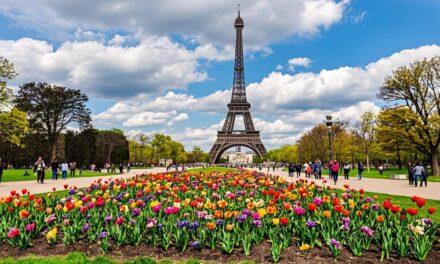
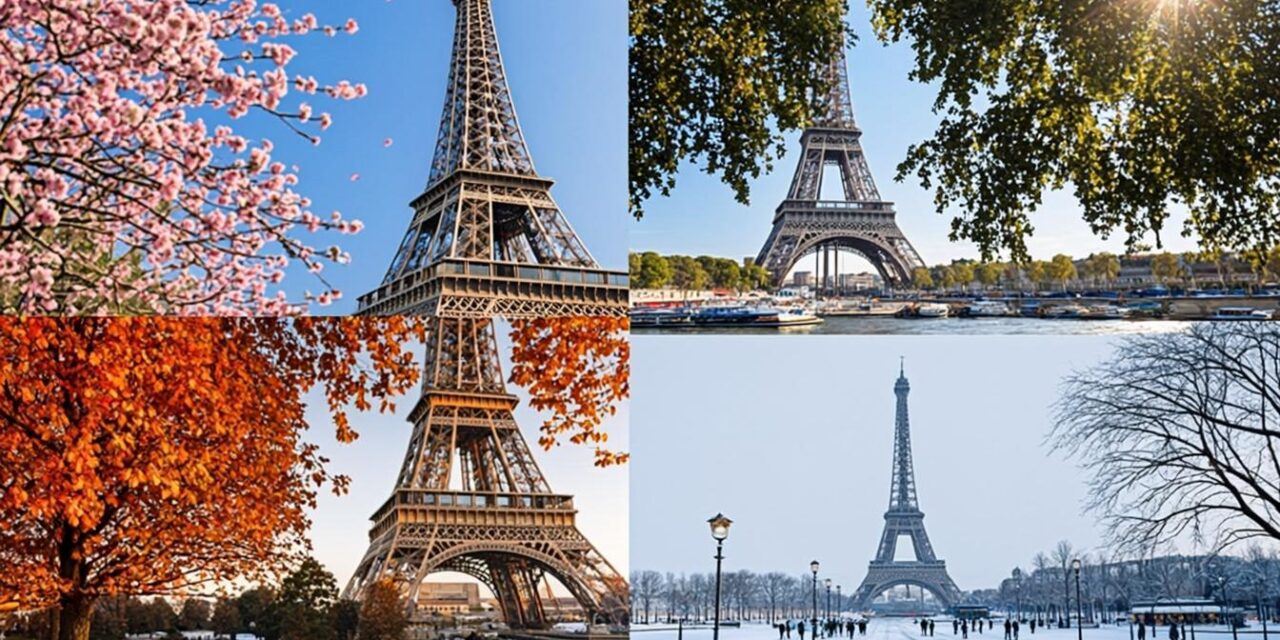
Spring is widely considered the best time to visit Paris, and for good reason. As the cherry blossoms bloom along the Seine and in the Tuileries Garden, the city shakes off its Paris in winter grey and bursts into colour. Temperatures are mild (average highs of 13-20°C / 55-68°F), daylight hours increase dramatically (from 12 hours in March to over 15 by May), and the café terraces begin to fill with Parisians soaking up the sun. The Paris Marathon (April), Fête du Travail (May 1), and Victoire Day (May 8) are major spring events. Easter and school holidays in April can bring crowds, so book accommodation early. For more details, check out our March in Paris.
Best for: Pleasant weather, cherry blossoms, outdoor dining, museum visits without peak Paris in summer queues.
Downsides: Occasional spring showers, prices start rising in April, Easter and school holidays can be crowded. For more, see our guide to Paris packing list.
Summer (June to August) — Peak Season
Summer is the most exciting and the most crowded time to visit Paris. The days are long (sunrise before 6 AM, sunset after 10 PM in June), the weather is warm (25-28°C / 77-82°F), and the city is alive with festivals, open-air events, and a general festive atmosphere. Key events include the Fête de la Musique (June 21), Bastille Day (July 14), and Paris Plages (July-August). However, July and August bring peak crowds, the highest hotel prices of the year, and occasional heatwaves. Many local restaurants close in August as Parisians go on holiday.
Best for: Long days, outdoor activities, rooftop bars, festivals, Seine picnics.
Downsides: Crowds, high prices, heat, some restaurants close in August.
Autumn (September to November) — The Insider’s Favourite
Many Parisians and seasoned travellers consider September and October to be the best months to visit the city. The weather remains pleasant (average highs of 16-21°C / 61-70°F in September, cooling to 10-15°C / 50-59°F in November), the summer crowds have dispersed, hotel prices drop significantly, and the city’s parks and gardens are transformed by spectacular autumn foliage. The Journée du Patrimoine (Heritage Days in September) opens normally closed buildings to the public, while Fashion Week (September-October) brings an electric energy to the city. November is grey and damp, but it is the cheapest month for hotels and the start of the Christmas market season.
Best for: Fewer crowds, lower prices, beautiful autumn colours, comfortable walking weather, cultural events.
Downsides: Shorter days, November can be rainy and grey.
Winter (December to February) — Magical and Affordable
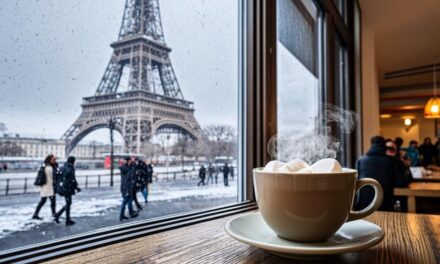
Winter in Paris has a unique charm that is hard to replicate at any other time of year. The Christmas lights on the Champs-Élysées, the festive Christmas markets, the spectacular department store window displays, and the warmth of a café serving vin chaud and soupe à l’oignon create an atmosphere that is both romantic and deeply Parisian. Winter is the least crowded season for tourism (outside Christmas week), hotel rates are at their lowest, and museum queues are minimal. January is the cheapest month of the year for hotels. The main downside is the cold (average highs of 5-8°C / 41-46°F) and short daylight hours (sunset at approximately 5 PM in December, 6 PM by February). However, Paris’s indoor attractions — the Louvre, Musée d’Orsay, Opéra Garnier, and thousands of cafés — make it a wonderful city to explore in any weather.
Best for: Budget travel, fewer crowds, Christmas markets, museums without queues, cozy café culture.
Downsides: Cold, short days, some attractions have reduced winter hours.
The Absolute Best Month: September
If we had to pick a single best month to visit Paris, it would be September. The weather is still warm and pleasant (but without the extreme heat of July-August), the summer crowds have gone, the September light is famously beautiful (the “golden light” that has inspired painters for centuries), restaurant terraces are still open, hotel prices have dropped, and the cultural season is restarting with new exhibitions, operas, and performances. September truly offers the best of all worlds — summer vibes without the summer chaos.
For budget travellers, January is the clear winner, with hotel rates at their lowest, fewer tourists, and the January sales (soldes) offering discounts of 30-70% at virtually every shop in the city. For romantics, December is unmatched — there is simply nothing more magical than Paris at Christmas. For photographers, April (cherry blossoms) and October (autumn foliage) offer the most visually stunning conditions.
Related: May in Paris