Your First Time in Paris: Everything You Need to Know to Survive and Thrive
Your first trip to Paris is a moment you’ll remember for the rest of your life — but it can also be one of the most overwhelming travel experiences you’ll ever have. Between the language barrier, the unfamiliar metro system, the pickpockets, the restaurant etiquette you didn’t know existed, and the sheer number of things to see and do, it’s easy to make mistakes that cost you time, money, and precious vacation hours. This survival guide is designed to prevent every common first-timer mistake and give you the confidence to navigate Paris like someone who’s been there a dozen times. We cover the scams you’ll encounter within minutes of arriving, the transport system that confuses everyone at first, the cultural faux pas that Parisians judge you for, and the insider shortcuts that turn a stressful trip into the experience of a lifetime.
The 10 Biggest Mistakes First-Timers Make (And How to Avoid Them)
After guiding thousands of visitors through Paris, we’ve seen every mistake in the book. Here are the ones that cost the most time and money. Number one: not booking the Eiffel Tower online 60 days in advance. Tickets sell out within hours of release, and without a pre-booked ticket, you’ll either wait in a 2-3 hour queue or miss going up entirely. Number two: staying in a hotel right next to the Eiffel Tower or on the Champs-Élysées. These areas are overpriced, crowded, and lack the authentic Parisian charm you came for. Instead, stay in the Le Marais (4th), Latin Quarter (5th), or Bastille (11th) for a better experience at a lower price.
Number three: trying to see everything. First-timers routinely plan 5-6 attractions per day, which leads to exhaustion and disappointment. Paris rewards a slower pace — plan 2-3 activities per day and leave room for spontaneous discoveries. Number four: eating at restaurants near major attractions. The quality is poor, prices are inflated, and you’ll miss the real Parisian food scene entirely. Walk 10-15 minutes away from any tourist attraction and you’ll find far better food at lower prices. Number five: not validating metro tickets. The fine is 50 euros, and inspectors are active on lines 1, 4, and 9. Number six: carrying large backpacks into museums. Most require you to check bags, which costs time. Use a small day bag instead. Number seven: exchanging money at airport kiosks or street bureaus — you’ll get terrible rates. Use ATMs or card payments instead. Number eight: only visiting the 1st and 8th arrondissements and missing the real Paris in neighborhoods like the 11th, 20th, and 13th. Number nine: taking taxis without ensuring the meter is running. Number ten: saying ‘bonjour’ but then immediately speaking English — always ask ‘Parlez-vous anglais?’ first, and wait for the response.
Navigating CDG Airport Like a Pro
Charles de Gaulle Airport (CDG) is massive, confusing, and stressful for first-timers. Here’s exactly how to handle it. When you land, follow the signs for ‘Paris par le RER’ if you’re taking the train, or ‘Taxis’ for a taxi. The RER B train to central Paris is the best value option at 12.50 euros and takes about 35 minutes to reach central stations like Gare du Nord, Châtelet-Les Halles, and Saint-Michel. Buy your ticket at the RATP window or the automated machines in the station (they accept credit cards). Board the train heading toward ‘Robinson’ or ‘Saint-Rémy-lès-Chevreuse’ (NOT ‘Mitry-Claye’ or ‘Aéroport Charles de Gaulle 2 TGV’). Keep your ticket handy — you’ll need it to exit at your destination.
If you’re taking a taxi, use the official taxi rank outside each terminal. Fixed fares apply to Paris destinations: 58 euros to the Right Bank, 63 euros to the Left Bank (2026 rates). These are flat rates regardless of traffic, so there’s no risk of being overcharged. Uber and Bolt also operate from CDG and are sometimes cheaper, especially during non-peak hours. Private airport transfers booked in advance cost 65-90 euros and are the most stress-free option — the driver meets you at arrivals with a name sign. If you’re arriving at Orly Airport instead, the Orlyval train connects to the RER B at Antony (total cost: 12.90 euros, travel time: 30-40 minutes). Whatever you do, avoid the ‘shuttle buses’ that tout for passengers inside the terminal — they’re overpriced and unreliable. Pre-book your transport before you arrive and you’ll save yourself significant stress.
The Metro System Demystified
The Paris Metro is your lifeline in the city, and understanding how it works will save you enormous amounts of time and stress. The system has 16 numbered lines (plus 5 RER suburban lines) color-coded on maps. Each line has two endpoints — the direction you need is indicated by the name of the final station on that branch. For example, if you want to go to the Louvre on Line 1, you need to head toward ‘Château de Vincennes’, not ‘La Défense’. The direction signs are on the walls and ceilings of corridors, and they show which direction each platform serves. Follow the signs for your line, then the sign for the correct direction.
A single ticket (t+) costs 2.15 euros and covers any metro ride within zones 1-2 (which includes all of central Paris). Buy tickets individually or in a carnet of 10 for 17.35 euros. Insert your ticket into the turnstile, retrieve it from the slot, and keep it until you exit. The doors on most trains open manually — lift the handle or press the button (on newer trains, doors open automatically). Each station has an exit marked ‘Sortie’ — follow the signs for the neighborhood or monument you want, as stations often have multiple exits. Platform screens show the destination of the next train and how many minutes until it arrives. The metro runs from approximately 5:30 AM to 1:00 AM (2:30 AM on Fridays and Saturdays). Download the Citymapper app for the easiest navigation — it tells you exactly which line, direction, and exit to use, plus real-time delays.
Scams You’ll Encounter and How to Beat Them
Paris has a well-organized ecosystem of scams targeting tourists, and first-timers are prime targets. The most common is pickpocketing on the metro. Thieves work in teams of 2-4 on crowded platforms and trains. One person drops something in front of you, another ‘helps’ you pick it up while a third takes your wallet from your back pocket. The solution: never carry a wallet in your back pocket, use a crossbody bag that sits in front of you, and be extra alert when boarding or exiting trains. Keep your phone in a zippered pocket, not in your hand, on the metro. Lines 1, 4, 7, and 9 are the worst — these connect major tourist attractions and are always crowded.
At the Sacré-Coeur, the ‘friendship bracelet’ scam is almost guaranteed to happen. As you climb the steps, someone will approach, grab your wrist, and tie a woven bracelet around it while engaging you in conversation. They’ll then demand payment (typically 5-10 euros). The solution: keep your hands in your pockets, say a firm ‘non merci’ without stopping, and walk around them. Don’t make eye contact or engage. At the Louvre, the ‘petition’ scam involves people (usually women pretending to be deaf) shoving a clipboard at you and asking you to sign a petition for a ‘charity’. While you’re distracted signing, their accomplice picks your pocket. The solution: simply say ‘non’ and keep walking without breaking your stride. Near the Eiffel Tower, the ‘gold ring’ scam involves someone ‘finding’ a gold ring on the ground, showing it to you, and claiming it’s real gold. They’ll offer it to you as a ‘gift’ and then ask for money. The solution: ignore them completely. The ‘closed museum’ scam involves someone approaching you near a major attraction and telling you it’s closed or there’s a strike, then directing you to a shop or tour. Real closures are announced on the attraction’s official website — never trust strangers giving directions to alternative attractions.
Restaurant Etiquette: The Rules Nobody Tells You
Walking into a Parisian restaurant for the first time can feel like a test you didn’t study for. Here are the unwritten rules that will make every meal go smoothly. When you enter, wait to be seated — don’t just sit down at any table. The waiter will either seat you or indicate that you should choose your own table (typically in casual places). Once seated, the waiter will bring menus and ask for your drink order. Water is not free — you’ll be offered bottled water (flat or sparkling) for 3-6 euros. If you want free tap water, ask for a ‘carafe d’eau’. Bread is almost always included and is complimentary.
The French meal structure is important to understand: entrée (starter), plat (main course), dessert, then coffee. If you order a plat and a dessert, you’re ordering two courses — perfectly normal and common. A ‘formule’ or ‘menu’ (set menu) offering two or three courses for a fixed price is almost always the best value — typically 18-28 euros for two courses or 25-40 euros for three. The plat du jour (dish of the day) is usually the freshest and best value option. When you’re ready to leave, you must ask for the bill — say ‘L’addition, s’il vous plaît’. The waiter will never bring it unasked, as this is considered rude in French culture. Splitting the bill is not standard practice — French groups usually pay the whole amount and settle between themselves later. Credit cards are widely accepted, but cash is preferred at small bistros and markets. And the golden rule: never rush. A meal in Paris is an event, not a refueling stop. Relax, enjoy each course, and let the experience unfold at its natural pace.
Money-Saving Hacks That Actually Work
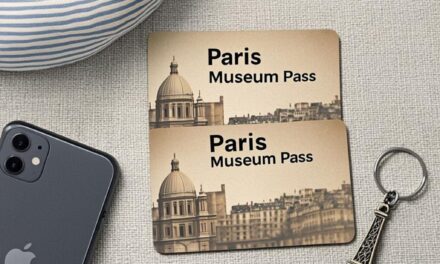
Paris doesn’t have to break the bank. Here are the money-saving strategies that deliver real results. First, buy the Paris Museum Pass (55 euros for 2 days, 70 euros for 4 days) if you plan to visit 3+ paid attractions. It covers the Louvre (17 euros alone), Musée d’Orsay (16 euros), Sainte-Chapelle (11.50 euros), Arc de Triomphe (16 euros), and over 50 more. The pass also gives you fast-track entry at many sites, saving hours of queue time. Second, eat lunch as your main meal — the same dish that costs 25 euros at dinner often costs 15 euros at lunch thanks to the ‘formule déjeuner’ (lunch set menu) offered by most restaurants.
Third, make picnics your best friend. A fresh baguette from a boulangerie (1.30 euros), a wedge of Comté cheese from a fromagerie (4-5 euros), a bottle of wine from a supermarket (3-5 euros), and some fruit from a market vendor (2-3 euros) creates a world-class picnic for two for under 15 euros. Eat it on the banks of the Seine or in the Luxembourg Gardens for an experience that costs 10x less than a restaurant meal. Fourth, walk whenever possible — Paris is incredibly walkable, and you’ll discover amazing things between metro stations that you’d otherwise miss. Fifth, take advantage of free museum days: most museums offer free entry on the first Sunday of each month (though crowds can be heavy). Under-26 EU residents get free permanent access to all national museums. Sixth, download TheFork app for restaurant reservations — it regularly offers 20-50% discounts at excellent restaurants. Seventh, use the Velib’ bike-sharing system (5 euros/day) instead of taxis for short hops. Eighth, avoid taxis during rush hours (8-10 AM and 5-7 PM) — the metro is much faster and cheaper.
What to Pack (And What to Leave at Home)
Overpacking is a first-timer mistake that will cost you in baggage fees, hotel room space, and sore shoulders from carrying heavy bags up narrow metro stairs. Paris apartments and hotel rooms are small — there’s nowhere to store three suitcases. Pack for 5-7 days maximum, even for longer trips, and plan to do laundry at a laverie (self-service laundromat) — there’s one in every neighborhood. Essential items: comfortable walking shoes (you’ll walk 15,000+ steps daily), a light rain jacket, a scarf (functional and fashionable), 2-3 pairs of pants, 3-4 tops, a medium jacket or sweater, underwear and socks, toiletries, a universal power adapter, a portable charger, and a small crossbody day bag with a zipper.
What to leave at home: expensive jewelry (pickpocket bait), high heels (cobblestones and metro stairs will destroy you), multiple heavy guidebooks (use your phone), more than two pairs of shoes, a hair dryer (most hotels provide one), and anything you wouldn’t want to lose. A critical tip: check the weather forecast 48 hours before departure and pack accordingly — Paris weather is famously unpredictable, and ‘spring’ can mean anything from 8°C to 25°C. Layering is always the answer. If visiting in summer, bring a hat and sunscreen — museum queues involve long periods in direct sun. If visiting in winter, bring warm layers, waterproof boots, gloves, and a warm hat — Paris cold is damp and bone-chilling. And always bring a collapsible water bottle — the public fountains (fontaines Wallace) provide free, clean drinking water throughout the city.
Your First 24 Hours: The Perfect Itinerary
Arriving in Paris for the first time is disorienting, so here’s a structured plan for your first 24 hours that minimizes stress and maximizes wonder. Afternoon arrival: check into your hotel, drop your bags, and immediately go for a walk in your neighborhood. This grounds you in the city, helps you find nearby cafes and shops, and cures jet lag faster than napping will. If it’s before 6 PM, head to the nearest panoramic viewpoint — the Sacré-Coeur steps, the Printemps rooftop terrace, or the Arc de Triomphe — to get your bearings and see the city spread out before you. This orientation moment is incredibly valuable for first-timers.
For your first dinner, choose a casual bistro near your hotel rather than venturing far. Use TheFork app to find a well-reviewed restaurant with a menu du jour (set menu) for 18-25 euros. Order a plat du jour and a glass of wine, take your time, and let the fact that you’re in Paris really sink in. Day 1: Start at the Eiffel Tower (booked months in advance) for the morning light, then walk along the Seine to the Musée d’Orsay for the afternoon. End with a Seine river cruise at sunset. Day 2: Morning at the Louvre (book timed entry), afternoon exploring Le Marais, dinner in the Bastille area. Day 3: Morning at Sacré-Coeur and Montmartre, afternoon at Sainte-Chapelle and the Île de la Cité, evening at the Arc de Triomphe and Champs-Élysées. This gives you the iconic highlights while keeping the pace manageable and leaving plenty of time for cafe stops and wandering.
Frequently Asked Questions
Is Paris dangerous at night?
Central Paris is generally very safe at night, especially in well-lit, well-traveled areas. Stick to main streets and avoid poorly lit parks after dark. The Marais, Saint-Germain, and Bastille areas are lively and safe well into the evening. Avoid the periphery (edges of the city) at night if you’re unfamiliar with the area.
Should I take a Hop-On Hop-Off bus?
We don’t recommend them for first-timers. They’re expensive (30-40 euros), stuck in traffic, and give you a detached, touristy view of the city. Walking and the metro are faster, cheaper, and more authentic. If you want a bus tour, take a single 2-hour guided tour instead of the hop-on hop-off option.
Do I need the Paris Museum Pass?
If you plan to visit 3+ paid museums in 2-4 days, yes — it saves money and includes fast-track entry. If you only plan to visit the Louvre and one other museum, individual tickets are cheaper. The pass is also excellent for spontaneous museum visits — you can pop into any covered museum for 15 minutes without feeling like you wasted the ticket price.
What if I don’t speak any French?
You’ll be fine in tourist areas and major museums. Learn three phrases: ‘Bonjour’ (hello), ‘Merci’ (thank you), and ‘Parlez-vous anglais?’ (do you speak English?). Start every interaction with ‘Bonjour’ and you’ll be treated well regardless of your French level. Translation apps handle everything else.
How much cash should I carry?
Carry 50-100 euros in small bills and coins for markets, bakeries, tips, and small purchases. Virtually everything else accepts contactless card payments. Avoid carrying large amounts — pickpockets are common in tourist areas. Use ATMs at banks for the best exchange rates, never currency exchange bureaus.