
Giverny Day Trip from Paris: The Ultimate Guide to Monet’s Gardens (2026)
A day trip from Paris to Giverny is one of the most magical experiences you can have in all of France. Located just 75 km northwest of the capital, this charming village in Normandy was home to Claude Monet for over 40 years, and it was here that he painted some of his most iconic works, including the legendary Water Lilies series. Every year, more than 500,000 visitors make the journey to walk through the very gardens that inspired Impressionism’s greatest master. Whether you are an art lover, a garden enthusiast, or simply looking for a peaceful escape from the Parisian hustle, Giverny delivers an unforgettable experience that feels like stepping inside a living painting.
How to Get from Paris to Giverny
By Train (The Most Scenic Route)
The easiest and most enjoyable way to reach Giverny from Paris is by train. From Gare Saint-Lazare, take the SNCF train to Vernon (approximately 45 minutes on the TER Normandie line). Trains run regularly throughout the day, with tickets costing around €15-25 one way when booked in advance. Once you arrive at Vernon station, you have several options to complete the final 7 km to Giverny: a pleasant 20-minute walk along the Seine River path, a local shuttle bus (Navette Giverny) that runs from April through October for approximately €8 round trip, or a taxi for around €15-20.
By Guided Tour
If you prefer a hassle-free experience, numerous guided tours depart from Paris daily during the season. Companies like GetYourGuide, City Wonders, and Paris City Vision offer combined tours that include round-trip coach transport, skip-the-line entry to Monet’s Gardens and the Musée des Impressionnismes, and often a knowledgeable guide who brings the history of Giverny to life. Tours typically range from €70-120 per person and last around 5-6 hours, making them an excellent value when you factor in transport, entry fees, and the expertise of a local guide.
By Car
Driving to Giverny takes approximately one hour from central Paris via the A13 autoroute towards Rouen. Exit at Vernon and follow the signs to Giverny. Parking is available near the gardens for approximately €6 per day. Keep in mind that during peak season (May through September), parking can fill up quickly, so arriving before 10 AM is highly recommended. For more details, check out our guide to getting around Paris cheaply.
Monet’s House and Gardens: What to Expect
The Clos Normand (The Flower Garden)
The Clos Normand is Monet’s meticulously designed flower garden that surrounds his iconic pink-and-green house. Spanning approximately one hectare, this garden is organized in a series of flowerbeds arranged by colour and height, creating a living palette that changes dramatically from spring through autumn. In spring, you will find tulips, daffodils, and forget-me-nots bursting with colour. Summer brings an explosion of roses, nasturtiums, and hollyhocks, while autumn introduces chrysanthemums, dahlias, and sunflowers. Monet himself was deeply involved in the garden’s design, once stating that he became a gardener “perhaps because of the flowers, and because of the need to paint them.” The central allée, lined with climbing roses and iron archways covered in clematis, is one of the most photographed spots in all of France and has remained virtually unchanged since Monet’s time.
The Water Garden (Jardin d’Eau)
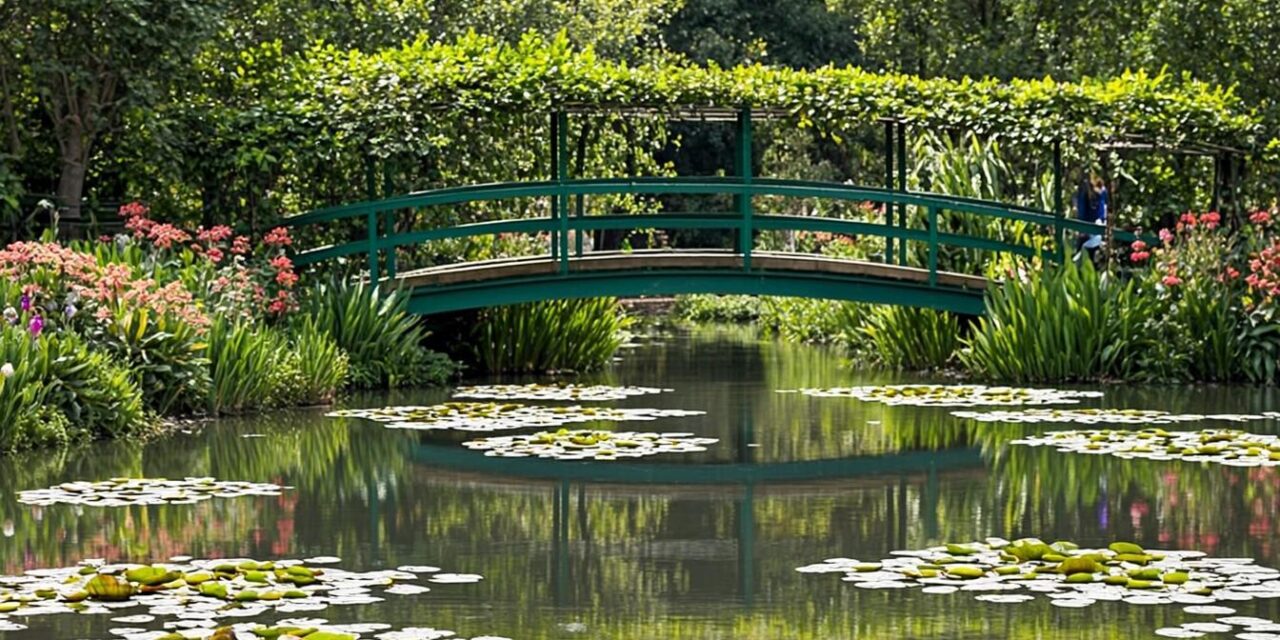
The Water Garden is perhaps the most famous part of Monet’s estate and the direct inspiration for his monumental Nymphéas (Water Lilies) series, now housed at the Musée de l’Orangerie in Paris. Accessed through an underground passage from the Clos Normand, this Japanese-inspired garden features a tranquil pond covered with water lilies, spanned by the iconic green Japanese bridge draped with wisteria. The garden also includes weeping willows, bamboo groves, and a breathtaking display of reflected clouds and sky on the pond’s surface. The best time to visit Paris the Water Garden is in the morning, when the light is soft and the reflections are at their most magical. Photography enthusiasts should plan to spend at least 30 minutes here alone.
Monet’s House
Monet’s house has been lovingly restored to its original state and offers a fascinating glimpse into the artist’s daily life. The ground floor features the blue kitchen, with its signature blue-and-white Rouen tiles, copper cookware, and enormous coal-burning stove. The first floor includes Monet’s bedroom, his first studio (where he painted the Cathédrale de Rouen series), and the salon jaune (yellow dining room), which features an extraordinary collection of Japanese prints that Monet collected throughout his life. The house also contains original furniture, personal belongings, and replicas of many of Monet’s paintings hung where they would have been during his lifetime.
The Musée des Impressionnismes Giverny
Located just a short walk from Monet’s house, the Musée des Impressionnismes Giverny (MIG) is a world-class museum dedicated to Impressionist art and its legacy. Opened in 2009 and designed by architect Philippe Robert, the museum hosts rotating exhibitions that explore the Impressionist movement, its precursors, and its influence on modern art. Past exhibitions have featured works by Monet, Renoir, Pissarro, Cézanne, and contemporary artists inspired by the Impressionist aesthetic. The museum also features a beautiful sculpture garden and a café overlooking the surrounding landscape. Combined tickets for Monet’s Gardens and the Musée des Impressionnismes are available for approximately €18, offering excellent value.
Best Time to Visit Giverny
The gardens are open from 1 April through 1 November, making spring and early summer the ideal time to visit. The absolute best period is late May through mid-June, when the water lilies are in full bloom, the wisteria drapes over the Japanese bridge, and the roses are at their peak. However, each month offers something unique: April brings tulips and the first blossoms, July and August feature the garden in its most lush and abundant state, while October offers golden autumnal light and a more peaceful, less crowded experience.
The gardens open daily at 9:30 AM, and arriving early is essential if you want to experience the Water Garden without crowds. By 11 AM on summer weekends, the paths can become quite congested, particularly around the Japanese bridge. For the most serene experience, plan your visit for a weekday morning in May or September.
Practical Tips for Your Giverny Day Trip
Entry fees: Monet’s House and Gardens cost approximately €11 for adults, €8 for students, and free for children under 7. The Musée des Impressionnismes costs approximately €9 for adults, with combined tickets available.
Food and dining: Giverny has several charming restaurants and cafés near the gardens. La Maison des Carpistes offers excellent Norman cuisine, while Hôtel Baudy (the former home of American impressionist painters) serves lovely lunches in its garden terrace. For a budget-friendly option, pack a picnic and enjoy it along the Seine River path between Vernon and Giverny.
What to bring: Comfortable walking shoes are essential, as the garden paths are gravel. Bring a camera with a good zoom lens for the water lilies, sunscreen and a hat for summer visits, and a light jacket for spring and autumn mornings. The gardens are fully accessible for wheelchair users and strollers.
Combine with: A Giverny day trip pairs beautifully with a visit to Vernon, a picturesque town on the Seine with a medieval church, half-timbered houses, and the impressive Collégiale Notre-Dame. The town’s Saturday morning market is one of the best in the region and makes a perfect lunch stop before or after your garden visit.
Why Giverny Should Be on Every Paris Itinerary
A day trip to Giverny is more than just a garden visit — it is an immersion into the world that gave birth to one of art history’s most revolutionary movements. Walking the same paths that Monet walked, seeing the exact water lilies he painted, and standing on the Japanese bridge that appears in countless masterpieces creates a connection to art and history that no museum can replicate. For first-time visitors to France and seasoned travellers alike, Giverny offers a peaceful, inspiring, and profoundly beautiful day out from Paris that will stay with you long after you return home. Whether you spend two hours or an entire afternoon, Giverny is a place that reminds you why France is called the world’s most beautiful country — and why Claude Monet never wanted to leave. For more details, check out our guide to best day trips from Paris.
Related: RER train guide