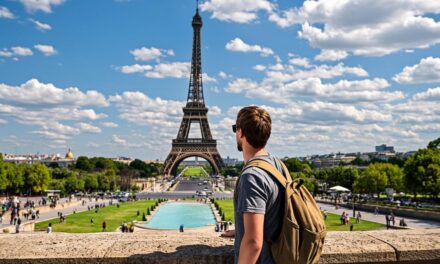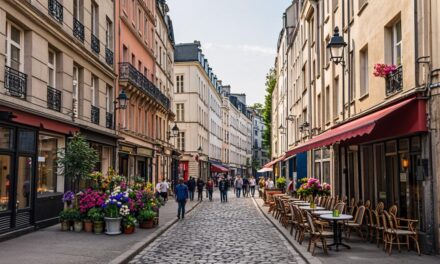
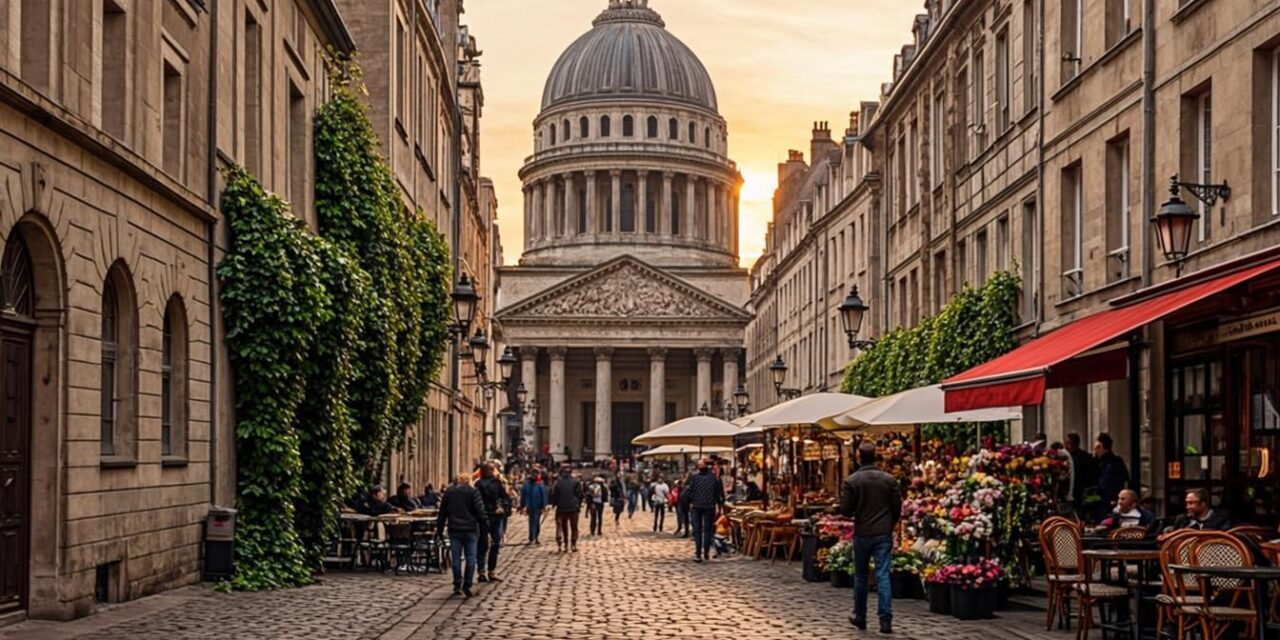
The Latin Quarter is where Paris began. Long before the Louvre Museum guide, the Eiffel Tower, or the Champs-Élysées existed, the hill on the Left Bank of the Seine was the centre of Roman Lutetia, and later the intellectual heart of medieval Europe. Today, the 5th arrondissement — universally known as the Latin Quarter — remains one of the most fascinating, walkable, and rewarding neighbourhoods in Paris, blending ancient history with a vibrant modern energy that comes from its large student population.
Named after the Latin language spoken by scholars at the Sorbonne University in the Middle Ages, the Latin Quarter is home to some of Paris’s most iconic landmarks: the Panthéon, the Sorbonne, the Jardin des Plantes, and the Shakespeare and Company bookshop. But beyond the famous sights, the neighbourhood is packed with hidden courtyards, excellent restaurants, bustling markets, and quiet corners where you can sit and imagine the centuries of students, philosophers, and revolutionaries who have walked these same streets.
Here is everything you need to know to explore the Latin Quarter like a local.
Why the Latin Quarter Is Special
The Latin Quarter is the oldest part of Paris. The Romans founded their city of Lutetia here in the 1st century BC, and the ruins of their Arènes de Lutèce (an ancient amphitheatre) and Thermes de Cluny (Roman baths) can still be visited today. This deep history gives the neighbourhood a sense of permanence and gravitas that is palpable as you walk its streets. Every stone seems to have a story. For more, see our guide to Montmartre guide.
In the Middle Ages, the Latin Quarter became the centre of European learning. The Sorbonne, founded in 1257, attracted scholars from across the continent, and the narrow streets were filled with students, monks, and booksellers. This intellectual tradition continues today — the 5th arrondissement remains the educational heart of Paris, home to several universities and the prestigious École Normale Supérieure. The student population gives the neighbourhood a youthful, international energy that sets it apart from the more sedate 6th and 7th Paris arrondissements guide on the Left Bank.
But the Latin Quarter is not just about history and academia. It is also one of the best food neighbourhoods in Paris. The Rue Mouffetard market street is one of the oldest and most atmospheric in the city, and the surrounding streets are packed with excellent restaurants, cafés, and wine bars at every price point. The neighbourhood also has some of the most beautiful green spaces in Paris, including the magnificent Jardin des Plantes and the tranquil Square René Viviani, which offers one of the best views of Notre-Dame.
The Best Things to Do in the Latin Quarter
The Panthéon: This magnificent neoclassical building, designed by Jacques-Germain Soufflot in the 18th century, is the final resting place of France’s greatest citizens. Voltaire, Rousseau, Victor Hugo, Émile Zola, Louis Braille, and Marie Curie are all buried here. The interior is awe-inspiring, with its soaring dome and Foucault’s Pendulum swinging gently from the ceiling. Entrance is €11.50, and the view from the colonnade is one of the best in Paris.
The Sorbonne: While you cannot freely wander the university buildings, the exterior of the Sorbonne chapel and the surrounding Place de la Sorbonne are beautiful and well worth a visit. The square is a lovely place to sit at a café and watch students go about their day, much as they have done for nearly 800 years.
The Jardin des Plantes: Paris’s main botanical garden is a 23-hectare oasis of greenery that includes the Grande Galerie de l’Évolution (a stunning natural history museum), a small zoo, Alpine gardens, and miles of beautiful walking paths. It is one of the most peaceful and pleasant places in all of Paris, and entrance to the gardens is free. The Grande Galerie costs €12 and is genuinely worth it — the main hall, with its parade of taxidermy animals under a glass roof, is spectacular.
Shakespeare and Company: This legendary English-language bookshop on the Rue de la Bûcherie has been a gathering place for writers and readers since 1951. The original shop was founded by Sylvia Beach in 1919 and was the first publisher of James Joyce’s Ulysses. Today, the shop continues the tradition of hosting readings, supporting aspiring writers, and providing a warm, book-lined sanctuary for literature lovers. Browsing the shelves and meeting the resident cats is a quintessential Paris experience.
The Arènes de Lutèce: Hidden away in a quiet residential square, this Roman amphitheatre (built in the 1st century AD) once seated 15,000 spectators for gladiatorial combats and theatrical performances. It is free to visit and remarkably well preserved. Sitting on the ancient stone seats, surrounded by modern apartment buildings, is a surreal and wonderful experience.
Hidden Gems and Secret Spots
The Rue Mouffetard Market: While the market itself is well known, many visitors miss the hidden passages and tiny squares that branch off it. Duck down the Rue du Pot de Fer for a quieter, more atmospheric experience, or explore the Place de la Contrescarpe at the top of the market street — a beautiful circular square lined with cafés.
The Square René Viviani: This tiny park beside the Saint-Julien-le-Pauvre church offers one of the best views of Notre-Dame Cathedral. It is also home to the oldest tree in Paris — a robinia pseudoacacia (black locust) planted in 1601. The park is free and almost always quiet, making it a perfect spot for a moment of reflection.
The Curie Museum: The laboratory where Marie Curie conducted her groundbreaking research on radioactivity is preserved as a museum in the 5th arrondissement. It is a fascinating and moving visit — you can see her actual laboratory equipment, her personal papers (still radioactive and stored in lead-lined boxes), and the garden where she used to take breaks. Entrance is free.
The Church of Saint-Étienne-du-Mont: This beautiful church, located next to the Panthéon, contains the shrine of Sainte-Geneviève (the patron saint of Paris), the only surviving rood screen in Paris, and stunning stained glass. It is free to enter and almost always uncrowded — a peaceful alternative to the more famous Notre-Dame.
Where to Eat in the Latin Quarter
Budget-friendly (under €15): Grab a crêpe from one of the stands along the Rue Mouffetard market, or pick up a fresh baguette sandwich from Boulangerie Eric Kayser on the Rue Monge. For a sit-down meal, Le Coupe Chou offers excellent French bistro fare at reasonable prices in a charming 17th-century setting.
Mid-range (€15–35): Le Mouffetard is a beloved neighbourhood bistro that has been serving traditional French cuisine since the 1950s. Le Bistrot d’Henri on the Rue des Fossés-Saint-Bernard is another local favourite, with a warm atmosphere and excellent steak frites. For something different, try Afghani House on the Rue de la Montagne Sainte-Geneviève for incredible Afghan cuisine.
Splurge (€35+): Le Cinq Codet is a Michelin-starred restaurant that offers inventive French cuisine in a beautifully restored 19th-century building. La Truffière on the Rue Blainville has been serving truffle-focused cuisine since 1988 and is one of the most romantic restaurants in the neighbourhood.
How to Spend a Perfect Day in the Latin Quarter
Start your morning at the Rue Mouffetard market, browsing the stalls and picking up fresh fruit, cheese, and a baguette for a picnic. Walk to the Jardin des Plantes and enjoy your breakfast on a bench overlooking the botanical gardens. Visit the Grande Galerie de l’Évolution if the weather is poor, or simply wander the garden paths. After lunch, head to the Panthéon and climb to the colonnade for the view. Next, visit Shakespeare and Company to browse the books and meet the cats. End the afternoon at the Square René Viviani with its view of Notre-Dame and its 400-year-old tree. For dinner, treat yourself to a bistro meal at Le Coupe Chou or Le Mouffetard. End the evening with a drink at Le Piano Vache, a charming dive bar with live music and a bohemian atmosphere.
The Latin Quarter is the neighbourhood where Paris’s past, present, and future converge — Roman ruins, medieval scholars, revolutionary history, and today’s student energy all coexist in this extraordinary corner of the Left Bank. It is a neighbourhood that rewards slow exploration, and every visit reveals something new. For more details, check out our guide to 3 days in Paris.
Related reading: best arrondissements
Related reading: best cafes