
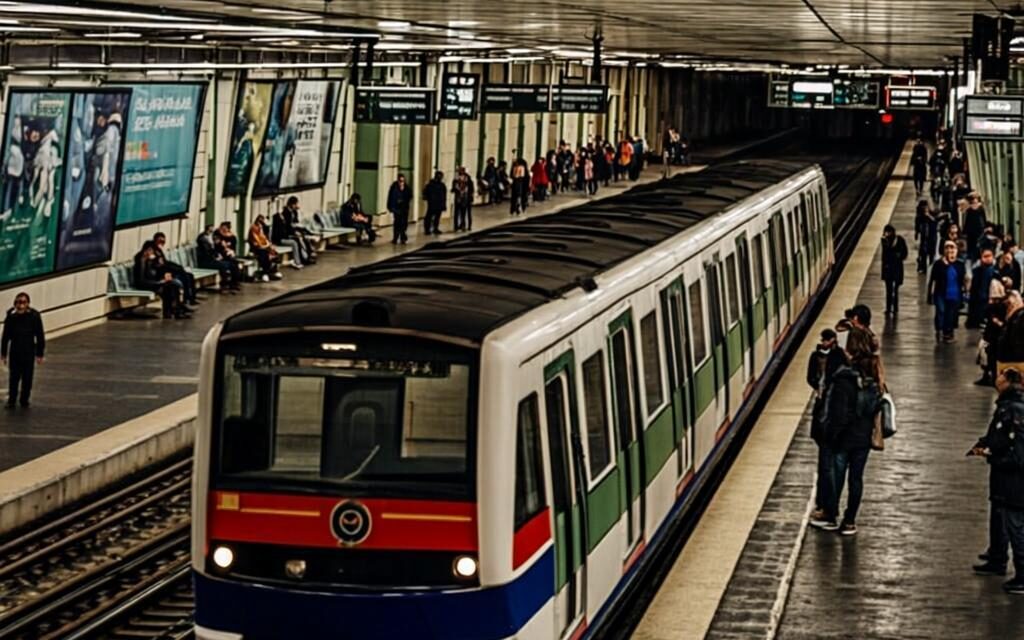
Complete Transportation Guide for Paris 2026
Paris has one of the finest public transportation networks in the world, making it entirely possible to explore the city without ever setting foot in a car. The system includes 16 Paris metro guide lines, 5 RER train guide-train-guide-how-to-use-the-paris-rer-for-how to get from Paris airports to the city centers-disneyland-and-day-trips-2026/”>RER train guide suburban train lines, 8 tram lines, dozens of bus routes, and an extensive bike-sharing network. Understanding how to navigate this system efficiently will save you both time and money during your visit. This guide covers everything you need to know about getting around Paris like a local.
The Paris Métro: Your Best Friend
The Paris Métro is the backbone of the city’s transportation system, with 16 lines (numbered 1–14, plus 3bis and 7bis) serving over 300 stations. It operates daily from approximately 5:30 AM to 12:45 AM (2:15 AM on Fridays and Saturdays). During peak hours, trains run every 2–3 minutes, and even late at night you rarely wait more than 8 minutes.
The metro is color-coded and logically numbered. Each line connects to multiple others, making transfers straightforward. Key interchange stations include Châtelet-Les Halles (the largest underground station in Europe), République, Charles de Gaulle-Étoile, and Saint-Lazare. Most stations have digital displays showing real-time wait times. The system is largely accessible via stairs and escalators, though only about 20% of stations are fully wheelchair accessible.
Ticket Options and Pricing
- Single ticket (t+): €2.15 — valid for one continuous journey including transfers between metro and bus/RER within zone 1
- Carnet of 10 tickets: €18.90 — saves approximately 12% compared to individual tickets
- Navigo Easy (rechargeable card): €2 for the card + load tickets — convenient and reusable
- Navigo Semaine (weekly pass): €30 for unlimited travel in zones 1–5 — valid Monday to Sunday only
- Navigo Découverte (monthly pass): €84.10 for unlimited zones 1–5 travel — excellent for extended stays
- Paris Visite (tourist pass): €13.95 for 1 day / €22.65 for 2 days / €30.90 for 3 days (zones 1–3) — overpriced for most visitors
Best value tip: For most tourists staying 2–4 days, the carnet of 10 tickets is the best deal. If you plan to make more than 4 journeys per day, consider the Navigo Semaine. The Paris Visite tourist pass is generally not worth it — the Navigo is cheaper and covers more zones.
RER: Suburban Trains for Longer Distances
The RER (Réseau Express Régional) is a network of 5 suburban train lines (A, B, C, D, E) that also serve central Paris. The RER is essential for reaching airports, Versailles, Disneyland, and outer neighborhoods. Within central Paris, RER trains are faster than the metro because they stop less frequently. Key RER destinations:
- RER B: Charles de Gaulle Airport (€11.80, 35 minutes) and Orly Airport via Orlyval connection
- RER C: Versailles (€4.35, 45 minutes to Versailles Château Rive Gauche)
- RER A: Disneyland Paris (€11.35, 45 minutes to Marne-la-Vallée Chessy)
Important: RER tickets are zone-based and cost more than regular metro tickets for travel beyond zone 1. You must validate your ticket at the turnstile and keep it until the end of your journey — ticket inspections are frequent and fines for invalid tickets are €50.
Buses: Seeing Paris Above Ground
Paris buses are an underrated way to see the city. The 68 bus route runs from Place de la Nation through the Latin Quarter, past the Louvre, and up to the Arc de Triomphe — one of the most scenic bus rides in Europe. Bus stops display real-time arrival information, and buses run from 6:30 AM to 9:30 PM (some lines until 12:30 AM). The same metro tickets are valid on buses. The main advantage of buses is that you get to see the city as you travel, rather than being underground. They are also less crowded than the metro during rush hour.
Bikes: Vélib’ Métropole
Paris’s Vélib’ Métropole bike-sharing system offers both standard and electric bikes across the city. A subscription costs €5/month for standard bikes, with each 30-minute ride free and subsequent 30-minute blocks at €1. Electric bikes cost €1 per 30-minute ride on top of the subscription. With over 1,400 stations, you are never far from a bike. Cycling along the Seine on the dedicated bike paths is one of the most pleasant ways to explore Paris. The city has invested heavily in cycling infrastructure, and many roads now have protected bike lanes.
Taxis, Uber, and Bolt
Traditional Paris taxis can be hailed on the street, found at designated taxi ranks, or booked by phone. The meter starts at €7.10 during the day and €8.70 at night, Sundays, and holidays. A typical cross-city ride costs €12–€20. Uber operates widely in Paris and is often slightly cheaper than taxis, with UberX starting at around €8 for short trips. Bolt is the cheapest ride-sharing option, sometimes 30–40% less than Uber. All ride-hailing apps can pick up at Charles de Gaulle Airport (UberX is approximately €45–€65 to central Paris, depending on traffic).
Pro Tips for Getting Around Paris
Download the Citymapper or RATP app for real-time route planning across all modes of transport. Avoid the metro during rush hours (8–9:30 AM and 5–7 PM) if you are carrying luggage — it gets extremely crowded. Keep your ticket until the end of your journey on both the metro and RER. When taking the RER to CDG Airport, note that not all RER B trains go to the airport — check the destination board for trains ending at “Aéroport Charles de Gaulle” (not “Mitry-Claye”). Always validate your ticket before boarding RER trains — the fine for traveling without a validated ticket is €50, and there is no mercy for tourists.
Related: bikes and scooters