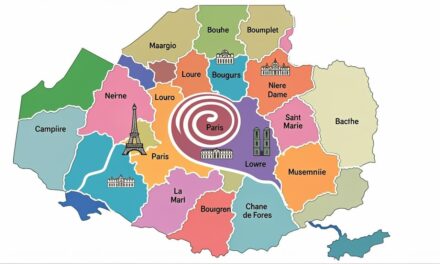

Choosing best arrondissements to stay in Paris for your first visit can feel overwhelming. The city has 20 arrondissements, each with its own distinct character, and making the wrong choice can mean spending hours on the metro every day or feeling disconnected from the magic of Paris. But do not worry — we have done the research so you do not have to.
After living in and travelling through Paris for years, we are confident that the best arrondissements for first-time visitors are the 4th (Le Marais), 5th (Latin Quarter), 6th (Saint-Germain), 7th (Eiffel Tower area), and 1st (Louvre area). Each of these neighbourhoods offers a different flavour of the Paris experience, and the right one for you depends on your priorities — budget, atmosphere, proximity to specific sights, and the kind of trip you want to have.
In this guide, we break down the five best arrondissements for first-time visitors with honest pros, cons, and hotel recommendations at every price point. For more details, check out our guide to Paris arrondissements guide.
The 5 Best Arrondissements for Your First Trip to Paris
Here is a quick comparison to help you choose immediately:
4th (Le Marais): Best all-rounder — central, vibrant, great food, excellent shopping, close to major sights. Ideal for first-timers who want a lively, walkable base with lots to do on their doorstep.
5th (Latin Quarter): Best for history and budget — the oldest part of Paris, home to the Sorbonne, the Panthéon, and the beautiful Jardin des Plantes. Slightly more affordable than Le Marais or Saint-Germain, with a charming student-town atmosphere.
6th (Saint-Germain): Best for classic elegance — the quintessential Left Bank experience with beautiful boulevards, literary cafés, and the magnificent Jardin du Luxembourg. More expensive but worth it for a romantic or special-occasion trip.
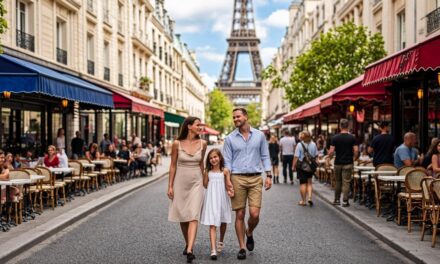
7th (Eiffel Tower Area): Best for iconic views — wake up to the Eiffel Tower, walk to the Musée d’Orsay, and enjoy the safest and most upscale neighbourhood in Paris. Perfect for families and those who want a quieter, more refined base.
1st (Louvre Area): Best for sightseeing convenience — you are literally steps from the Louvre, the Tuileries Garden, the Palais Royal, and some of the city’s best shopping. Very central but can be crowded and expensive.
1st Arrondissement — Stay Near the Louvre
The 1st arrondissement is the geographical and historical heart of Paris. It is home to the Louvre Museum, the Tuileries Garden, the Palais Royal, and the Île de la Cité (where Notre-Dame and Sainte-Chapelle are located). Staying here means you can walk to virtually every major sight in central Paris — the Louvre is on your doorstep, the Champs-Élysées are a 15-minute walk, and the Left Bank is a five-minute stroll across the Seine.
The pros of staying in the 1st are obvious: unmatched convenience, beautiful architecture, and a sense of being at the centre of everything. The cons are that it can feel crowded (especially around the Louvre pyramid and Rue de Rivoli), best hotels in Paris tend to be expensive, and the restaurant scene can be hit-or-miss — many establishments cater to tourists rather than locals. That said, if you are only in Paris for two or three nights and want to maximise your sightseeing time, the 1st is hard to beat. Budget hotels start around €120 per night, mid-range options are €180–280, and luxury properties can exceed €500.
4th Arrondissement — The Classic Paris Experience
The 4th arrondissement, which encompasses the eastern part of Le Marais, the Île Saint-Louis, and the northern tip of the Île de la Cité, is widely considered the best all-around neighbourhood for first-time visitors. It offers the perfect combination of central location, walkability, dining, shopping, and atmosphere. For more details, check out our guide to first time guide to Paris.
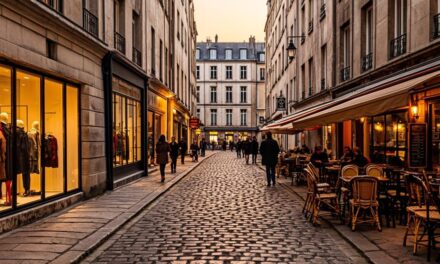
Le Marais’s narrow, medieval streets are packed with independent boutiques, art galleries, wine bars, and some of the best restaurants in Paris. The Place des Vosges is one of the most beautiful squares in Europe, and the Île Saint-Louis feels like a secret village in the middle of the Seine. The 4th is also well-connected by metro (Line 1 at Hôtel de Ville and Saint-Paul), making it easy to reach every part of Paris.
The main downside of the 4th is that it can be noisy at night, especially on weekends. The streets around Rue des Rosiers and Rue Vieille du Temple are popular with locals and tourists alike, and the area can feel packed on Saturday afternoons. But if you want a lively, authentic neighbourhood with something new to discover around every corner, the 4th is the place.
5th Arrondissement — Walkable and Historic
The 5th arrondissement, also known as the Latin Quarter, is the intellectual heart of Paris. Home to the Sorbonne University, the Panthéon (where Voltaire, Rousseau, Hugo, and other French greats are buried), and the magnificent Jardin des Plantes, the 5th offers a rich historical and cultural experience at a slightly more affordable price point than the 4th or 6th.
The neighbourhood is centred on the Rue Mouffetard, one of the oldest street markets in Paris, where you can buy fresh bread, cheese, fruit, and prepared dishes from stalls that have been operating for generations. The streets around the Panthéon and the Sorbonne are beautiful, tree-lined, and full of character. The 5th is also home to the Shakespeare and Company bookshop, a legendary English-language bookshop that has been a gathering place for writers since the 1950s.
7th Arrondissement — Wake Up to the Eiffel Tower
There is something undeniably magical about opening your curtains in the morning and seeing the Eiffel Tower framed by your window. The 7th arrondissement makes this possible — it is the neighbourhood that stretches from the Champ de Mars (the park beneath the Eiffel Tower) to the Musée d’Orsay, and it is one of the most desirable residential areas in all of Paris.
The 7th is quieter, more residential, and more upscale than the central arrondissements. The streets around Rue Cler have a village-like feel, with a wonderful covered market, independent bakeries, and family-run cafés. The neighbourhood is very safe, very clean, and very expensive. Hotels here are among the priciest in Paris, but the quality tends to be excellent, and the peace and quiet after a busy day of sightseeing is genuinely restorative.
7 Mistakes First-Timers Make When Choosing Where to Stay
1. Staying too far from the centre. Arrondissements 10–20 are generally too far from the major sights for a first-time visitor. 2. Choosing an area based solely on price. A cheap hotel in a remote location will cost you more in time and transport than a slightly more expensive one in a central neighbourhood. 3. Ignoring metro proximity. Check how close your hotel is to a metro station before booking — you want to be within a five-minute walk. 4. Booking near a major train station. The areas around Gare du Nord, Gare de l’Est, and Gare de Lyon are convenient for transit but not ideal for a holiday base. 5. Overlooking apartment rentals. For stays of four nights or more, a rented apartment on the Île Saint-Louis or in the Marais can offer better value and a more authentic experience than a hotel. 6. Not reading recent reviews. Paris hotel quality varies enormously, and a “4-star” rating in France does not always match international expectations. 7. Forgetting about staircase apartments. Many Paris apartments are on the 4th or 5th floor without a lift — check before booking if you have mobility concerns or heavy luggage.
Your first trip to Paris is a once-in-a-lifetime experience, and choosing the right arrondissement to stay in can make all the difference. Whether you prioritise convenience, romance, budget, or atmosphere, one of these five neighbourhoods will give you the perfect base for exploring the City of Light.
Related reading: 3-day Paris itinerary