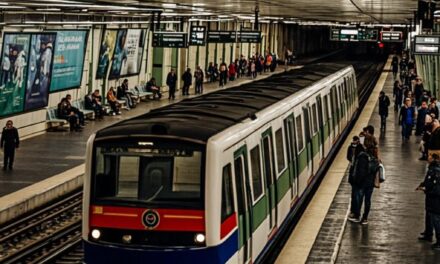
What Is the RER?
The Réseau Express Régional (RER) is Paris’s regional express train network, operating as a hybrid system that serves both central Paris and the surrounding Île-de-France suburbs. Unlike the Métro, which is confined to central Paris, the RER extends far beyond the city limits and connects major destinations including airports, theme parks, and historic towns. The RER shares many stations with the Métro in central Paris but runs on wider-gauge tracks with fewer stops, making it significantly faster for longer journeys.
There are five RER lines — A, B, C, D, and E — each identified by a letter and a distinct color. Together, they carry over 2.5 million passengers daily and are indispensable for reaching CDG Airport, Orly Airport, Disneyland Paris day trip Paris, the Palace of Versailles, and dozens of other suburban destinations. This guide provides everything you need to use the RER confidently in 2026.
RER vs. Métro: What Is the Difference?
While the RER and Métro share stations in central Paris, they differ in several important ways:
- Speed: RER trains are faster, making fewer stops and covering longer distances. A ride from central Paris to CDG Airport takes about 35 minutes on the RER B.
- Reach: The Métro operates only within Paris (Zone 1). The RER extends into Zones 2–5 and beyond.
- Pricing: A standard T+ ticket works for the Métro and RER within Zone 1 only. Traveling beyond Zone 1 on the RER requires a point-to-point ticket (billet origine-destination) priced by zones.
- Validation: You must validate (composter) your paper ticket before boarding the RER. Navigo cards are validated by tapping the turnstile reader.
- Ticket inspection: Ticket inspectors (contrôleurs) patrol RER trains frequently. Always keep your validated ticket or pass until you exit.
RER Line A: The East–West Backbone
Color: Red
Key Routes: Saint-Germain-en-Laye / Poissy / Cergy ↔ Boissy-Saint-Léger / Marne-la-Vallée
RER A is the busiest railway line in Europe, carrying over 1.2 million passengers per day. It runs east–west through the heart of Paris, serving critical stops including Charles de Gaulle–Étoile, Auber, Châtelet–Les Halles, Gare de Lyon, and Nation. For more details, check out our day trips from Paris.
RER A to Disneyland Paris
The RER A is the primary public transport link to Disneyland Paris. Take the RER A in the direction of Marne-la-Vallée – Chessy. The journey from central Paris (Châtelet–Les Halles) takes approximately 40 minutes. The station is located directly at the entrance to the Disneyland parks. A one-way ticket from central Paris to Marne-la-Vallée costs approximately €7.60 (full fare). This ticket covers Zones 1–5.
- Tip: If you have a Navigo weekly or monthly pass (Zones 1–5), travel to Disneyland Paris is included at no extra charge.
- Tip: Trains run approximately every 10–15 minutes throughout the day. Check the last train time if you plan to stay for the evening fireworks show.
RER Line B: The Airport Line
Color: Blue
Key Routes: Aéroport Charles de Gaulle (CDG) / Mitry-Claye ↔ Robinson / Saint-Rémy-lès-Chevreuse
RER B is arguably the most important RER line for visitors, as it provides direct rail service between central Paris and Charles de Gaulle Airport (CDG). It also connects with Orly Airport via the Orlyval shuttle.
RER B to CDG Airport (Terminals 1 and 2)
The RER B runs directly from central Paris to CDG Airport, stopping at both major terminal complexes: For more details, check out our guide to Paris metro guide.
- Aéroport Charles de Gaulle 1 (Terminal 1): Serves Terminal 1 and Terminal 3. This is the first airport stop when arriving from Paris.
- Aéroport Charles de Gaulle 2 – TGV (Terminal 2): Serves Terminal 2 (sub-terminals A–F). This is the second airport stop and also connects to TGV high-speed rail services.
The journey from Châtelet–Les Halles to CDG takes approximately 30–35 minutes. A one-way ticket from central Paris to CDG costs approximately €11.45 (full fare). Trains run every 7–15 minutes from about 5:00 AM to midnight.
Understanding CDG Terminal Stops
One of the most common mistakes travelers make is getting off at the wrong terminal station. Pay close attention: For more details, check out our guide to getting around Paris cheaply.
- If you are flying from Terminal 1 or Terminal 3, get off at Aéroport Charles de Gaulle 1.
- If you are flying from Terminal 2A through 2F, get off at Aéroport Charles de Gaulle 2 – TGV.
- The station names are displayed on the train and announced over the intercom. Check the overhead displays for the next stop.
RER B to Orly Airport (via Orlyval)
To reach Orly Airport (ORY) using the RER B, you need a combination of the RER B and the Orlyval automated shuttle:
- Take the RER B to the Antony station (about 25 minutes from Châtelet–Les Halles).
- Transfer to the Orlyval shuttle at Antony (follow the signs inside the station).
- The Orlyval takes approximately 8 minutes to reach Orly (both South and West terminals).
The combined ticket (RER B + Orlyval) costs approximately €12.15 one-way. The Orlyval runs every 4–7 minutes from 6:00 AM to 11:00 PM. The total journey time from central Paris is about 35–40 minutes.
Roissybus: The Alternative to RER B
The Roissybus is a direct express bus operated by RATP that runs between Opéra in central Paris and CDG Airport (all terminals). Key details:
- Journey time: Approximately 60–75 minutes depending on traffic.
- Cost: Approximately €16.60 one-way.
- Frequency: Every 15–20 minutes from 5:15 AM to 12:30 AM.
- Advantages: No transfers, direct to all terminals, luggage racks available.
- Disadvantages: Subject to traffic jams on the A1 highway, especially during rush hour.
The Roissybus can be more convenient than the RER B if you are staying near Opéra or have heavy luggage, as it eliminates the need to navigate stairs and transfers. However, the RER B is faster and more reliable in terms of schedule, as it is not affected by road traffic.
RER Line C: The Sightseeing Line to Versailles
Color: Yellow
Key Routes: Multiple branches serving Pontoise, Versailles, Massy, and Dourdan
RER C is the most complex RER line, with multiple branches that split at various junction points. For tourists, the most important destination is the Palace of Versailles.
RER C to Versailles
To reach the Château de Versailles, take the RER C in the direction of Versailles – Rive Gauche (not Versailles – Chantiers, which is served by Transilien trains from Montparnasse). The journey from central Paris (Saint-Michel Notre-Dame) takes approximately 35–45 minutes depending on the service. A one-way ticket costs approximately €4.20 (Zones 1–4).
- Tip: The Versailles – Rive Gauche station is a 10-minute walk from the palace entrance. Follow the signs or use your phone’s map for navigation.
- Tip: On weekends and during peak tourist season, arrive early to avoid long queues at both the RER station and the palace.
Other Destinations on RER C
RER C also serves several worthwhile day-trip destinations:
- Paris Musée d’Orsay (station: Musée d’Orsay) — one of the world’s great Impressionist art museums.
- Eiffel Tower (station: Champ de Mars – Tour Eiffel) — closest RER stop to the tower.
- Invalides — Napoleon’s tomb and the Army Museum.
- Auvers-sur-Oise — the village where Vincent van Gogh spent his final days, popular for art lovers.
RER Line D: The North–South Regional Line
Color: Green
Key Routes: Orry-la-Ville – Coye ↔ Melun / Malesherbes
RER D runs north–south through Paris, serving Gare du Nord, Châtelet–Les Halles, Gare de Lyon, and Maisons-Alfort. It is less frequently used by tourists but can be helpful for reaching specific suburbs. Note that RER D shares tracks with RER B between Gare du Nord and Châtelet–Les Halles, and disruptions on one line often affect the other.
Day Trip Destinations on RER D
- Melun — gateway to the Château de Vaux-le-Vicomte, a stunning 17th-century estate that inspired Versailles.
- Coulommiers — a charming town in the Brie cheese region, perfect for food lovers.
RER Line E: The Eastern Express
Color: Purple/Magenta
Key Routes: Haussmann – Saint-Lazare ↔ Chelles-Gournay / Tournan
RER E runs from the Haussmann – Saint-Lazare station (near the major department stores in the 9th arrondissement) eastward through Gare de l’Est to the eastern suburbs. It is primarily a commuter line but can be useful for travelers heading to eastern destinations or connecting from Gare de l’Est.
Pricing and Tickets for the RER
Zone-Based Pricing
RER fares are calculated based on the zones you travel through. There are five concentric zones around Paris:
- Zone 1: Central Paris (covered by standard T+ ticket or Navigo pass).
- Zone 2–3: Inner suburbs (e.g., La Défense, Stade de France).
- Zone 4: Outer suburbs (e.g., Versailles, Orly Airport approaches).
- Zone 5: Far suburbs including CDG Airport, Orly Airport, and Disneyland Paris.
Always buy a ticket that covers all zones on your route. If you are caught without the correct ticket, you will face a fine of €50–€65.
Common RER Ticket Prices (2026)
- Zone 1 only (central Paris): €2.15 (T+ ticket)
- Zone 1 to Zone 3: Approximately €3.60
- Zone 1 to Zone 4 (Versailles): Approximately €4.20
- Zone 1 to Zone 5 (CDG Airport): Approximately €11.45
- Zone 1 to Zone 5 (Disneyland Paris): Approximately €7.60
- Zone 1 to Orly (RER B + Orlyval): Approximately €12.15
Navigo Pass Coverage on the RER
The Navigo Semaine (weekly) and Navigo Mensuel (monthly) passes cover all five zones on the RER. This means you can travel to CDG Airport, Orly Airport (via Orlyval), Disneyland Paris, Versailles, and any other RER destination within Zones 1–5 without any additional ticket. If you plan to make multiple trips beyond Zone 1 during your stay, a Navigo pass is almost always the most economical option.
Important: The standard Navigo pass does not cover the Orlyval supplement. You will still need to pay a small supplement (approximately €1.30) when using Orlyval, even with a Navigo pass. However, the Navigo pass does cover the Orlybus.
Buying Tickets: Ticket Windows vs. Machines
Ticket Machines (Billetteries Automatiques)
Every RER and Métro station has automated ticket machines that sell tickets for all destinations. Machines accept:
- Credit and debit cards (Visa, Mastercard, American Express)
- Contactless payment (Apple Pay, Google Pay)
- Coin payments (though bills are not always accepted)
Machines offer menus in multiple languages including English, Spanish, German, and Japanese. Select your destination station from the list or search alphabetically. The machine will calculate the correct fare automatically.
Ticket Windows (Guichets)
Staffed ticket windows are available at major RER stations including Châtelet–Les Halles, Gare du Nord, Saint-Michel, and all airport stations. Windows are useful if you have questions, need a refund, or have a special fare requirement. Window staff generally speak English. Note that ticket window hours are shorter than machine availability—many windows close in the evening.
Buying Tickets in Advance
You can purchase RER tickets online through the RATP website or the Île-de-France Mobilités app. Tickets can be loaded onto a Navigo Easy card at any station machine. This is convenient for Paris airport transferss, as you can purchase your ticket before arriving at the station and avoid waiting in line.
Peak vs. Off-Peak Travel
RER fares are the same during peak and off-peak hours for standard journeys. However, the experience differs dramatically:
- Peak hours: 7:30–9:30 AM and 5:00–7:30 PM on weekdays. RER A and RER B are extremely crowded. Trains may be standing-room-only, and you may need to wait for one or two trains to pass before you can board.
- Off-peak hours: Mid-morning, mid-afternoon, and weekends. Seats are readily available, and the atmosphere is far more relaxed.
- Sunday travel: Trains run less frequently on Sundays, with gaps of 15–20 minutes between services on some lines. Plan accordingly.
Luggage on the RER: Tips and Advice
Traveling with luggage on the RER is common but requires planning:
- Board at the front or rear of the train where luggage racks and more space are available. Avoid the middle cars, which are the most crowded.
- Travel during off-peak hours if possible. Luggage on a packed rush-hour RER B train is a stressful experience.
- Use the luggage racks — RER trains have overhead racks and end-of-car luggage areas. Keep your bags where you can see them.
- Watch your belongings at all times, especially at airport stations and major transfer points where thieves target distracted travelers with luggage.
- Elevators are limited. Most RER stations in central Paris do not have elevators. If you have heavy bags, factor in extra time for stairs. CDG Airport RER stations and Gare du Nord have elevators.
- Avoid multiple transfers if you have luggage. Direct routes (e.g., RER B to CDG) are much easier than routes requiring a correspondence.
RER Line-by-Line Quick Reference
- RER A (Red): East–west backbone. Disneyland Paris (Marne-la-Vallée), La Défense, Gare de Lyon, Vincennes.
- RER B (Blue): North–south line. CDG Airport, Orly Airport (via Orlyval at Antony), Gare du Nord, Saint-Michel, Denfert-Rochereau.
- RER C (Yellow): Sightseeing line. Versailles, Musée d’Orsay, Eiffel Tower, Invalides, Auvers-sur-Oise.
- RER D (Green): North–south regional. Gare du Nord, Châtelet, Gare de Lyon, Melun (Vaux-le-Vicomte).
- RER E (Purple): Eastern line. Haussmann – Saint-Lazare, Gare de l’Est, eastern suburbs.
Service Disruptions and Strikes
France is known for periodic transport strikes (grèves), and the RER is often affected. During strikes:
- Check the RATP website and app before departing. Service plans are usually published the evening before a strike.
- Expect reduced frequency. During major strikes, only 1 in 2 or 1 in 3 trains may run.
- Rush-hour trains are reserved — during severe strikes, only trains during peak hours may operate.
- Have a backup plan. Consider buses, taxis, ride-sharing, or walking for shorter distances.
- RER A and RER B are the most frequently affected lines due to their importance and ridership.
Conclusion
The RER is your gateway to everything beyond central Paris—from the airports to Disneyland and Versailles. Understanding how the RER works, how to buy the right ticket, and how to navigate the system will dramatically enhance your Paris experience. Whether you are catching an early-morning flight at CDG, spending a magical day at Disneyland, or exploring the grandeur of Versailles, the RER is fast, affordable, and remarkably efficient once you know the basics. Plan ahead, buy the right ticket, and enjoy the ride.