Why Seven Days in Paris Is the Ultimate Experience
Seven days in Paris is not just a trip — it’s a transformation. With a full week, you have time to move beyond the highlights and truly live in Paris. You can wake up early for quiet museum visits, linger over two-hour lunches at neighborhood bistros, explore hidden passages and secret gardens, take not one but two day trips into the French countryside, and still have evenings free for spontaneous discoveries. Paris reveals itself slowly, and a week gives you the patience to let the city work its magic. For more details, check out our day trips from Paris.
This comprehensive 7-day itinerary is designed for the curious, the passionate, and the practical. Every day includes detailed timing, restaurant recommendations at multiple price points, transport logistics, daily budget breakdowns, and insider tips that will save you time and money. Whether you’re visiting in spring 2026 for cherry blossoms, summer for rooftop cocktails, autumn for golden light, or winter for cozy café culture, this guide adapts to every season.
Before You Depart: The Complete Planning Checklist
What to Book in Advance (Timeline)
- 8+ weeks before: Eiffel Tower summit tickets, Versailles palace pass (April–October), Michelin-starred restaurants, Moulin Rouge show tickets
- 4–8 weeks before: Louvre timed entry, Musée d’Orsay, Sainte-Chapelle, Giverny (if visiting April–October), cooking classes, food tours
- 2–4 weeks before: Dinner reservations at popular bistros (use TheFork or LaFourchette), Seine cruise, day-trip train tickets
- 1–2 weeks before: Verify all reservations, download offline maps, check museum hours for your travel dates
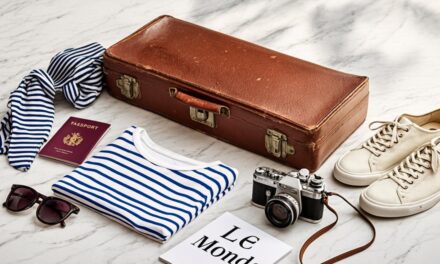
Packing Essentials for Paris 2026
- Walking shoes: Non-negotiable. You’ll average 12,000–18,000 steps daily. Leave stilettos at home.
- Layered clothing: Paris weather shifts constantly. A light jacket, scarf, and layers work year-round.
- Adapters: France uses Type E plugs (two round pins). Bring a universal adapter.
- Day bag: A secure crossbody bag or backpack. Pickpockets target tourists near major attractions.
- Portable charger: You’ll use your phone for photos, maps, and tickets all day.
- Dress code notes: Parisians dress smart-casual. No athletic wear at dinner. Gentlemen should bring collared shirts for nicer restaurants.
- Seasonal additions: Umbrella (spring/autumn), sunscreen (summer), warm layers + gloves (winter)
Transport Pass Strategy
The Navigo Semaine (weekly pass) at €30 is the best value if you’re staying Monday through Sunday — it covers unlimited Métro, RER, buses, and trams within zones 1–5 (including airports, Versailles, and Disney). If your week doesn’t align with Monday starts, use a Navigo Easy pass loaded with a carnet of tickets (€16.90 for 10) or pay-as-you-go with contactless bank cards. Download Citymapper for real-time route planning — it integrates Métro, RER, bus, Velib’ bike-share, and walking directions seamlessly. For more details, check out our Versailles day trip.
Day 1: Arrival and Paris Essentials
Getting from the Airport to Your Hotel
- From CDG (Charles de Gaulle): RER B to central Paris (€11.80, ~45 min to Châtelet-Les Halles). Or RoissyBus to Opéra (€16.20, ~60 min). Private shuttle: €60–80.
- From ORY (Orly): Orlyval + RER B (€11.30, ~45 min). Or Tram T7 to Villejuif + Métro. Orlybus to Denfert-Rochereau (€9.50).
- From Beauvais: Shuttle bus to Porte Maillot (€17.99, ~90 min).
Afternoon: Neighborhood Orientation (2:00 PM – 5:00 PM)
After checking into your accommodation, resist the urge to sprint to the Eiffel Tower. Instead, spend your first afternoon orienting yourself in your neighborhood. Walk the streets near your hotel. Find the nearest Métro station, boulangerie, pharmacie (drugstore), and supermarché. This local familiarity will pay dividends all week.
If you have energy after traveling, take a gentle walk to the Seine and stroll along the river. Cross a bridge or two. Stop at a café for a café crème and watch the city go by. This low-pressure introduction sets the perfect tone for your week.
Evening: Welcome Dinner
Keep it relaxed — you’re tired from travel, and jet lag is real. Choose something near your hotel:
- Bouillon Chartier (Grands Boulevards or Montparnasse): Paris’s most famous budget restaurant. Historic dining rooms with soaring ceilings. Classic French dishes for €8–15 per main. No reservations — expect a queue.
- Café Constant (7th arr.): Excellent casual French food from chef Christian Constant. No reservations, fair prices (€18–28 mains).
- Le Relais de l’Entrecôte (various locations): One menu only: salad, steak frites (with unlimited seconds), and dessert. Around €32/person for the full experience. Legendary.
Daily budget estimate (Day 1): Airport transfer €12–60 + dinner €15–35 + snacks €5–10. Total: €32–105 depending on transport choice.
Day 2: Iconic Landmarks — The Must-Sees
Morning: Eiffel Tower and Trocadéro (8:00 AM – 11:30 AM)
Start early. Arrive at the Eiffel Tower by 8:00 AM (it opens at 9:30 AM, but queues form early). With a pre-booked ticket, you’ll be up by 10:00 AM. Visit both the second level and summit. On clear days, the views stretch 80 kilometers. Cross to the Trocadéro Gardens for the classic reverse-angle photograph.
Insider tip: The west-facing side of the second level offers the best morning photos with the sun behind you. The steps option (674 stairs, €11 vs. €27 for elevator to summit) is a great way to start the day if you’re feeling energetic.
Mid-Morning: Arc de Triomphe and Champs-Élysées (12:00 PM – 1:30 PM)
Take the Métro to Charles de Gaulle-Étoile and climb the Arc de Triomphe (€16, 284 steps or elevator). The view down the Champs-Élysées with its twelve radiating avenues is one of the most dramatic urban vistas in the world. Napoleon commissioned this triumphal arch in 1806, and it remains a powerful symbol of French national identity. The Tomb of the Unknown Soldier and eternal flame at the base are deeply moving.
Lunch: Near the Champs-Élysées
- Ladurée: Famous for macarons. Their salon de thé on the Champs-Élysées is perfect for a light lunch (quiches, sandwiches, salads, €20–30).
- Le Clarence: Michelin-starred dining if you want to splurge on Day 2. Prix fixe lunch from €80.
- Pizza Marzano: Reliable Italian option if you want something quick and affordable. Pizzas €12–16.
Afternoon: Seine Walk and Notre-Dame (2:00 PM – 5:00 PM)
Walk from the Arc de Triomphe down the Champs-Élysées, through the Place de la Concorde (note the Egyptian obelisk), and along the Seine to the Île de la Cité. This 90-minute walk covers some of Paris’s most beautiful real estate. Stop at Shakespeare and Company and browse the shelves of this legendary English-language bookshop.
At Notre-Dame (or its exterior, depending on reopening status in 2026), take time to appreciate the Gothic architecture, the restored spire, and the surrounding neighborhood. Visit the Conciergerie (€11), the former prison best hotels in Paris Marie Antoinette was held before her execution.
Evening: Île Saint-Louis and Sainte-Chapelle (5:00 PM – 7:00 PM)
Walk to the neighboring Île Saint-Louis, a tiny island with a village atmosphere. Stop at Berthillon for the best ice cream/sorbet in Paris (open primarily September–June). Visit Sainte-Chapelle (€11) in the late afternoon when the stained glass is illuminated by western sun — it’s genuinely one of the most beautiful sights in all of Europe.
Dinner: Île Saint-Louis / Left Bank
- Le Flore en l’Île: Charming café facing the Seine. Good for simple fare and the famous hot chocolate. Mains €16–24.
- Auberge de la Reine Blanche: Traditional French cuisine with a warm atmosphere on the island. Mains €20–30.
- Le Petit Pont: Back on the Left Bank, this tiny bistro serves excellent onion soup and bistro classics. Mains €15–22.
Daily budget estimate (Day 2): Eiffel Tower €11–27 + Arc de Triomphe €16 + lunch €15–80 + Sainte-Chapelle €11 + transport €8 + dinner €18–30. Total: €79–172.
Day 3: Art Museums — A Deep Dive into Masterpieces
Morning: The Louvre (9:00 AM – 1:00 PM)
Four hours at the Louvre is the sweet spot — enough time for the highlights without museum fatigue. Use the Porte des Lions entrance (south side) to skip the main queue. Your curated route:
- Level 0, Denon Wing: Mona Lisa (allow 10 minutes, don’t fight for the front row), Winged Victory of Samothrace, Venus de Milo
- Level 1, Denon Wing: The Raft of the Medusa (Géricault), Liberty Leading the People (Delacroix), Coronation of Napoleon
- Sully Wing: Medieval Louvre foundations, Egyptian collection
- Richelieu Wing: Napoleon III Apartments (the most opulent rooms in Paris)
Strategy: Buy tickets online (€17). Visit on Wednesday or Friday for extended evening hours (until 9:45 PM). Avoid Tuesdays (closed) and weekends (packed).
Lunch: Near the Louvre
- Le Fumoir: Elegant bistro opposite the Louvre. Great salads, fish, and meat dishes. Mains €22–35.
- Café Marly: Inside the Louvre colonnade, with views of the Glass Pyramid. Pricey (mains €30–45) but the setting is worth it.
- Picnic option: Grab supplies from a nearby boulangerie and eat in the Tuileries Gardens. Under €10.
Afternoon: Musée d’Orsay and Musée de l’Orangerie (2:00 PM – 6:00 PM)
Cross the Seine to the Musée d’Orsay (€16) for the world’s greatest Impressionist collection. Two hours covers the essential works: Monet’s Water Lilies and cathedrals, Renoir’s Moulin de la Galette, Van Gogh’s self-portraits, Degas’ dancers, and Cézanne’s landscapes. Don’t miss the fifth-floor café behind the iconic clock — it’s one of the most photographed interiors in Paris.
Then walk 15 minutes to the Musée de l’Orangerie (€14) in the Tuileries Gardens. This small, perfectly curated museum houses Monet’s monumental Water Lilies murals — eight enormous canvases in two oval rooms designed to create an immersive experience. It’s a meditative, almost spiritual space. Also visit the lower level for excellent Post-Impressionist works by Renoir, Cézanne, Picasso, Matisse, and Modigliani.
Evening: Stroll Through the Tuileries and Palais-Royal
As the museums close, walk through the Tuileries Gardens at golden hour, then cross Rue de Rivoli to the Palais-Royal. Explore the colonnaded courtyard and the controversial striped columns of the Colonnes de Buren installation. The Palais-Royal gardens offer a peaceful escape from the crowds, and the surrounding arcades house excellent shops and restaurants.
Dinner: Palais-Royal / 1st Arrondissement
- Grand Véfour: Two-Michelin-star landmark. Set menu from €98. Book well in advance for the ultimate splurge.
- Verjus: Outstanding neo-bistro. Prix fixe lunch €38, dinner €55. One of the best-value fine-dining experiences in Paris.
- Rue des Petits Champs area: Dozens of excellent Japanese, Korean, and Vietnamese restaurants if you want a change from French cuisine.
Daily budget estimate (Day 3): Louvre €17 + Orsay €16 + Orangerie €14 + lunch €10–35 + transport €8 + dinner €20–98. Total: €85–188.
Day 4: Versailles — Royal Grandeur
Getting There
Take the RER C from central Paris to Versailles-Château-Rive-Gauche (45 minutes, €7.70 with Navigo). Trains depart every 15–20 minutes from stations including Saint-Michel, Musée d’Orsay, Invalides, and Pont de l’Alma. Buy the “Passport” ticket (€27) online for full access to the palace, gardens, and both Trianon estates.
Morning: The Palace (9:00 AM – 12:00 PM)
Arrive at opening time (9:00 AM) to beat the tour bus crowds. Your route through the Château de Versailles:
- Grand Apartments: Walk through the King’s State Apartment and the Hercules Salon, marveling at the ceilings painted by Le Brun
- Hall of Mirrors: The 73-meter-long gallery with 357 mirrors was designed to dazzle. Stand in the center and feel the weight of history — the Treaty of Versailles was signed here in 1919.
- Queen’s Grand Apartment: Marie Antoinette’s bedchamber and the opulent private rooms
- Chapel and Opera House: Don’t skip these architectural masterpieces
Audio guide: €7, available at the entrance. Excellent and informative — worth the cost.
Midday: The Gardens (12:00 PM – 1:00 PM)
Designed by André Le Nôtre beginning in 1661, the gardens of Versailles are the most magnificent in Europe. Covering 800 hectares, they feature the Grand Canal (1,500 meters long), 14 groves with decorative fountains, and thousands of meticulously maintained trees and flowerbeds. On Tuesdays, Saturdays, and Sundays from April to October, the Musical Fountains Show activates the fountains to classical music — a €10 supplement that’s absolutely worth it.
Lunch at Versailles
- Ore by Alain Ducasse: The palace’s upscale restaurant. Beautiful setting, French cuisine. Expect €50+/person.
- La Flottille: Located in the gardens near the Grand Canal. Good salads, quiches, and grilled meats. €15–25/person.
- Picnic: Stop at a boulangerie near the RER station in Versailles and eat in the gardens. Under €10.
Afternoon: The Trianon Estates (1:30 PM – 5:00 PM)
This is often the highlight of a Versailles visit. The Estate of Trianon offers a intimate contrast to the palace’s overwhelming grandeur:
- Grand Trianon: Louis XIV’s pink marble retreat, used for escapes from court life
- Petit Trianon: Marie Antoinette’s private sanctuary, given to her by Louis XVI. The simple, elegant interiors reveal a woman who craved privacy and simplicity
- Hameau de la Reine: A Norman-style farm village built for Marie Antoinette, complete with a working dairy, mill, and thatched cottages. It’s charming, peaceful, and photogenic
- The Gardens of the Trianon: More intimate and naturalistic than the main gardens, with the Temple of Love, the Belvedere, and the Queen’s Theatre
Evening: Return to Paris and Relaxed Dinner
After a full day at Versailles, you’ll be tired. Keep dinner simple and close to your hotel:
- Bouillon Julien: Beautiful Art Nouveau dining room near Grands Boulevards. Classic French dishes at fair prices (mains €12–18).
- Chez Gladines: Hearty, generous portions of southwest French cuisine. Mains €13–20. Popular, so expect a wait.
- Friendly Indian, Italian, or Lebanese: Paris has excellent international cuisine. Ask your hotel concierge for neighborhood recommendations.
Daily budget estimate (Day 4): Versailles passport €27 + transport €15.40 + fountain show €10 + lunch €10–50 + dinner €13–20. Total: €75–122.
Day 5: Montmartre and Le Marais — Contrasting Neighborhoods
Morning: Montmartre (9:00 AM – 12:30 PM)
Take the Métro to Abbesses (Line 12) and climb to the summit of the Butte Montmartre (or take the funicular, €2 with Navigo). Visit the Basilica of Sacré-Cœur, then explore the neighborhood’s winding, hilly streets.
Must-see Montmartre highlights:
- Place du Tertre: The famous artists’ square. Commission a portrait or simply enjoy the atmosphere
- Rue de l’Abreuvoir: Arguably the prettiest street in Paris, with ivy-clad walls and a vine-covered villa
- Wall of Love (Le Mur des Je t’aime): “I love you” in 250 languages on blue tiles
- Cimetière de Montmartre: Beautiful, atmospheric cemetery with elaborate tombs
- Moulin de la Galette: The historic windmill, now a restaurant
- Le Consulat: Iconic café-restaurant best restaurants in Paris Van Gogh, Renoir, and Monet painted
Lunch: Montmartre
- La Maison Rose: The pink restaurant you’ve seen on Instagram. Simple Provençal cuisine. Mains €18–25.
- Le Moulin de la Galette: Classic French in a historic setting. Mains €22–35.
- Le Relais de la Butte: Local bistro away from tourist crowds. Excellent value. Mains €16–24.
Afternoon: Le Marais (2:00 PM – 6:00 PM)
Take the Métro across to Le Marais (stations: Saint-Paul, Hôtel de Ville, Filles du Calvaire). This neighborhood is Paris’s most dynamic — a UNESCO-worthy blend of medieval architecture, Jewish heritage, LGBTQ+ culture, independent fashion, and world-class food.
Your Le Marais itinerary:
- Place des Vosges: Paris’s oldest planned square (1605). Red-brick symmetry, arcades, and linden trees. Sit on a bench and soak it in.
- Musée Carnavalet: The museum of Paris history — recently renovated and spectacular. €8. Allow 1.5–2 hours.
- Atelier des Lumières: Immersive digital art in a former foundry. Check current exhibition — always impressive. €16.
- Rue des Rosiers: The Jewish quarter’s main street. L’As du Fallafel (€8–10) is a must. Also try the salt beef sandwiches at Sacha Finkelsztajn.
- Shopping: Browse Rue des Francs-Bourgeois (designer boutiques), Rue de Turenne (vintage and antique shops), and the many independent galleries.
- Pierre Hermé: Stop for macarons or the famous Ispahan rose-raspberry pastry. €2–8 per item.
Evening: Le Marais Nightlife
The Marais comes alive after dark. Explore the cocktail bars and wine caves:
- Danico: Hidden cocktail bar behind a bookshelf in the Hoxton hotel. Creative cocktails, speakeasy vibe.
- Lou Pascalou: Relaxed wine bar with excellent natural wines and small plates. No reservations — just show up.
- Experimental Cocktail Club: Trendy, award-winning cocktail bar with a solid menu.
Dinner: Le Marais
- Camille: Romantic, flower-filled bistro. Seasonal French cuisine. Mains €22–32.
- Chez Janou: Vibrant Provençal spot. Famous for unlimited chocolate mousse. Mains €18–26.
- Breizh Café: The best crepes in Paris. Buckwheat galettes and sweet crepes. €14–22/person.
Daily budget estimate (Day 5): Funicular €2 + museum €8–16 + lunch €18–35 + transport €8 + dinner €18–32. Total: €54–93.
Day 6: Second Day Trip — Choose Your Adventure
Option A: Giverny — Monet’s Garden (April–October Only)
Take the train from Gare Saint-Lazare to Vernon (45–60 min, ~€25 round trip), then shuttle bus (€8 round trip) or rent a bike (€15/day). Monet’s home and gardens (€11 entry) are open April 1 through November 1. See the famous Japanese bridge, the water lily pond that inspired hundreds of paintings, and the artist’s colorful home. Allow 2–3 hours. Combine with the Musée des Impressionnismes (€9) next door.
Total cost: ~€55–70 including transport and entry.
Option B: Champagne Region — Reims or Épernay
Take the TGV from Gare de l’Est to Reims (45 minutes, ~€30–50 one-way). Visit the magnificent Reims Cathedral (where French kings were crowned, and where you’ll see Chagall’s stained-glass windows). Then tour the champagne cellars:
- Veuve Clicquot: Underground crayères (chalk cellars) dating to Roman times. Tours from €28.
- Taittinger: Also in crayères. Excellent tours and tastings. From €25.
- Pommery: Stunning Art Deco cellars with contemporary art installations. From €22.
In Épernay (30 min from Reims), walk the Avenue de Champagne, home to Moët & Chandon, Perrier-Jouët, and Mercier.
Total cost: ~€100–180 including transport, tours, and lunch.
Option C: Loire Valley Châteaux
Book a guided day tour or take the TGV from Gare de Lyon to Tours or Saint-Pierre-des-Corps (~1 hour, ~€40–70 one-way). Visit two to three châteaux:
- Château de Chambord: The largest and most recognizable. 426 rooms, double-helix staircase attributed to Leonardo da Vinci. €17.
- Château de Chenonceau: The “Ladies’ Château” spanning the River Cher. The most romantic. €14.
- Château de Villandry: Famous for its extraordinary ornamental gardens. €11.
Total cost: ~€120–200 including transport, entries, and lunch.
Option D: Disneyland Paris
Take the RER A to Marne-la-Vallée/Chessy (35–40 minutes from central Paris, €8.10 with Navigo). One-day tickets start at €56 for one park or €79 for both parks. Ideal if you’re traveling with kids or simply love theme parks. The park has expanded significantly with new Marvel and Frozen attractions. Plan for a full day (9:30 AM – 9:00 PM in summer).
Total cost: ~€75–120 including transport, ticket, and food.
Return to Paris: Relaxed Evening
After your day trip, keep your evening simple. Grab dinner near your hotel and rest up for your final full day in Paris. For more details, check out our guide to 5 days in Paris.
Daily budget estimate (Day 6): Ranges from €55 (Giverny) to €200 (Loire Valley) depending on your choice.
Day 7: Local Paris — Markets, Hidden Gems, and Farewell
Morning: Paris Market Experience (8:00 AM – 11:00 AM)
No Paris week is complete without experiencing a street market. Choose one based on the day of the week:
- Marché d’Aligre (Thursday–Sunday mornings): The most vibrant, least touristy food market in Paris. Excellent produce, cheese, charcuterie, and a flea market section. 12th arrondissement.
- Marché Bastille (Thursday and Sunday mornings): One of Paris’s largest markets. Three blocks of food vendors. Incredible variety and quality.
- Marché des Enfants Rouges (Tuesday–Sunday): Paris’s oldest covered market (1615). International food stalls — Moroccan, Japanese, Italian, Caribbean. Great for a diverse lunch.
- Marché Raspail (Tuesday, Friday, Sunday): Organic (bio) market on Sundays. Excellent produce, artisanal products, and ready-to-eat food.
Build yourself a picnic from market finds: fresh baguette, cheese, charcuterie, fruit, and a bottle of wine. Total: under €15 per person for an amazing feast. For more details, check out our guide to 3 days in Paris.
Late Morning: Hidden Gems Tour (11:00 AM – 1:00 PM)
Use your final morning to discover Parisian spots most tourists never find:
- Promenade Plantée (Coulée Verte): Paris’s elevated park, built on a former railway viaduct — the inspiration for NYC’s High Line. Beautiful greenery, flowers, and views. Start at Bastille.
- Canal Saint-Martin: Trendy, tree-lined canal with iron footbridges, cafés, and houseboats. Walk from République to the Seine.
- Cour du Commerce Saint-André: A hidden cobblestone courtyard near Odéon. Site of Dr. Guillotin’s workshop and the city’s oldest café. Magical atmosphere.
- Square des Batignolles: A charming village-like square in the 17th arrondissement with a pond, playground, and excellent neighborhood restaurants.
Lunch: Market Feast or Neighborhood Bistro
- Market picnic: Enjoy your finds in a nearby park. Under €15/person.
- Marché des Enfants Rouges stalls: Moroccan tagine €12, Japanese bento €13, Italian panini €10.
- Le Bistrot Paul Bert: If you haven’t been yet, make this your farewell Parisian bistro experience. Steak frites and profiteroles. Mains €20–30. Book ahead!
Afternoon: Shopping and Final Explorations (1:30 PM – 5:00 PM)
Your last afternoon in Paris deserves some intentional shopping and one or two final sights:
- Galeries Lafayette: The Art Nouveau dome alone is worth a visit. Free rooftop terrace with Eiffel Tower views. Excellent for luxury brands, French cosmetics, and souvenirs.
- Le Bon Marché: Left Bank department store with an extraordinary food hall (La Grande Épicerie). Great for gourmet gifts to bring home.
- Musée Marmottan Monet: The largest Monet collection in the world, housed in a beautiful townhouse in the 16th arrondissement. €14. Quiet, uncrowded, and exquisite.
- Centre Pompidou: If modern and contemporary art appeals, this inside-out building houses Europe’s finest collection (Kandinsky, Picasso, Duchamp, Dalí). €15.
- Last café stop: Find a sunny terrace, order a café and a pâtisserie, and simply watch Paris for one final hour.
Farewell Dinner: The Grand Finale
End your week with a meal you’ll remember forever:
- Le Train Bleu: Gare de Lyon’s magnificent Belle Époque restaurant. Painted ceilings, gilded moldings, Lyon-style cuisine. Mains €25–40. A stunning setting that captures the grandeur of Paris.
- Le Comptoir du Panthéon: Classic, reliable bistro fare in a lively Latin Quarter setting. Mains €18–28. Great energy.
- Septime: If you managed to book (3 weeks ahead), this Michelin-starred natural wine bistro serves the most exciting contemporary French cuisine in Paris. Prix fixe €75. One of the world’s best restaurants.
- Bouillon Julien or Chartier: For a budget grand finale, these historic restaurants offer atmosphere, history, and solid food at unbeatable prices.
Daily budget estimate (Day 7): Market shopping €15 + museum (optional) €14–15 + transport €8 + lunch €10–30 + dinner €15–75. Total: €62–143.
Seasonal Variations for Your 2026 Trip
Spring (April – June)
Generally the best time to visit Paris. Cherry blossoms bloom in late March/April. Weather is mild (12–22°C). Longer daylight hours mean more sightseeing time. Highlights: Giverny opens in April, Roland-Garros tennis in late May, Nuit des Musées (free museum night) in May.
Summer (July – August)
Hot (25–35°C) and crowded. Many Parisians leave for vacation in August, and some restaurants close. But Paris Plages transforms the Seine banks into urban beaches with sand and palm trees. Open-air cinemas and concerts proliferate. Sunset after 10 PM in June/July.
Autumn (September – November)
Golden light, manageable crowds, and comfortable temperatures (10–20°C). Rentrée (back-to-school season) means everything reopens. The grape harvest at Montmartre’s vineyard (October) is a charming local festival. Restaurant week (Tout Paris Table) offers great deals.
Winter (December – March)
Chilly (2–10°C) but magical. Christmas markets, illuminated boulevards, and hot chocolate season. Highlights: Champs-Élysées Christmas market, window displays at Galeries Lafayette and Printemps, ice skating at Hôtel de Ville, Soldes (sales) in January. Fewer tourists mean shorter museum queues.
Total Week Budget Summary
- Budget week: ~€650–900 (hostels/budget hotels, market lunches, Métro, free attractions, 2–3 paid museums)
- Mid-range week: ~€1,200–2,000 (3-star hotels, bistro dinners, all major museums, day trips, occasional taxis)
- Luxury week: ~€3,000+ (boutique hotels, Michelin restaurants, private tours, premium day trips, car services)
A week in Paris is a gift you give yourself. Follow this itinerary day by day, or cherry-pick the experiences that excite you most. Either way, the City of Light will exceed your expectations. Bon voyage, et bienvenue à Paris!
Ready to book? buy Paris Museum Pass online.
Ready to book? book a Seine cruise.